

TL;DR:
- Acne scarring significantly impacts emotional well-being and social confidence in the UAE.
- Early, personalized treatments combining multiple modalities yield the best results, especially for darker skin tones.
- Modern procedures like fractional lasers and microneedling effectively reduce scars when performed with proper care and sun protection.
Acne scarring affects 64.8% of people in the UAE, making it one of the most common skin concerns in the region. For many residents, especially those with darker skin tones, the problem does not stop when the breakout clears. Scars and post-inflammatory hyperpigmentation (PIH) linger for months or years, quietly chipping away at confidence and daily comfort. The good news is that modern cosmetic dermatology has changed the landscape entirely. Treatments are now safer, faster, and more personalized than ever before, and this guide walks you through everything you need to know about addressing acne scars with confidence.
Table of Contents
- The real impact of acne scars
- Why early and professional treatment matters
- How modern treatments work: Options, results, and safety
- Personalizing acne scar care in the UAE: Why one size doesn't fit all
- A new mindset: Treating scars is a path to self-confidence, not just skin deep
- Expert support for your scar-free journey in the UAE
- Frequently asked questions
Key Takeaways
| Point | Details |
|---|---|
| Scars are treatable | Modern dermatology offers safe and effective ways to dramatically reduce acne scars in UAE skin types. |
| Confidence boost | Treating scars restores self-esteem and improves quality of life for many UAE residents. |
| Personalization is key | The safest and best results come from clinic plans customized to your skin tone and scar type. |
| Early action matters | Seeking care sooner, rather than later, prevents worsening scars and improves outcomes. |
The real impact of acne scars
Acne scars are not just a skin-deep issue. They carry a real psychological weight that many people in the UAE quietly carry every day. Psychological effects of scarring include reduced self-esteem, heightened anxiety, depression, and social withdrawal. These are not minor inconveniences. They affect how you show up at work, how you interact at social gatherings, and how you see yourself in the mirror each morning.
The UAE population faces a unique combination of factors that make this problem more pronounced. The climate, genetic predisposition toward darker skin tones (Fitzpatrick types IV through VI), and high UV exposure all contribute to elevated rates of PIH alongside traditional scar formation. For many UAE females, up to 42% report feeling genuine embarrassment about their skin, avoiding social situations or career opportunities as a result.
Here is what untreated acne scarring can affect on a daily basis:
- Emotional well-being: Persistent low confidence, shame, and heightened self-criticism
- Professional life: Reluctance to speak in meetings, attend interviews, or take on visible roles
- Relationships: Social withdrawal, avoidance of close interactions or photographs
- Daily activities: Skipping events, wearing heavy makeup as a coping strategy, avoiding outdoor settings
"Acne scarring is linked to measurable increases in anxiety and depression, with patients reporting social avoidance and reduced quality of life comparable to other chronic skin conditions."
The encouraging truth is that most of these consequences are reversible. When you address the scars directly, the emotional relief tends to follow quickly. Exploring safe dark spot removal options is a meaningful first step toward reclaiming both your skin and your confidence.
Why early and professional treatment matters
One of the most common mistakes people make is waiting too long to treat acne scars, hoping they will fade on their own. Some do fade partially, but deeper atrophic scars (the sunken, pitted variety) and PIH that is exposed to sun without protection will often become more entrenched over time. The longer you wait, the more collagen remodeling has already occurred in the wrong direction.
Early intervention not only prevents worsening but also gives treatments a better environment to work in. Newer tissue is more responsive, and the skin's natural repair mechanisms are still active. Acting within the first few months of scar formation can significantly reduce the number of sessions needed and the intensity of treatment required.
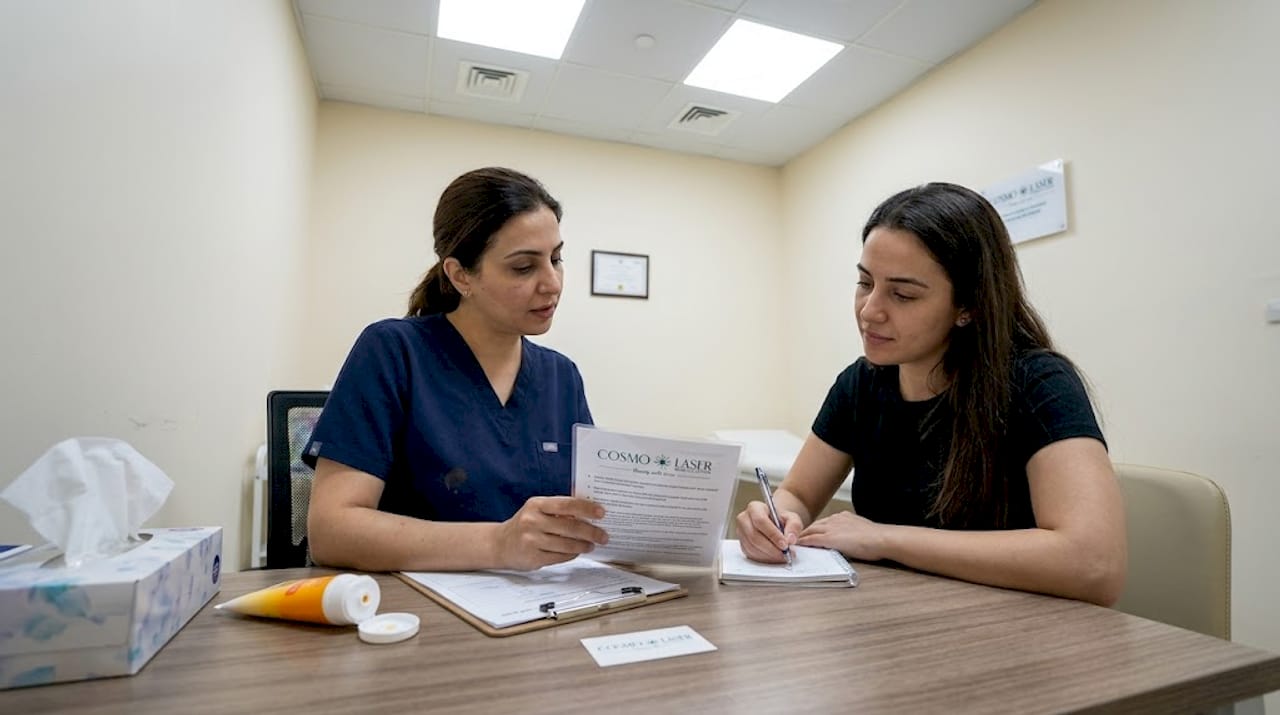
Professional assessment matters just as much as timing. A qualified dermatologist or aesthetic specialist will evaluate your scar type (icepick, rolling, boxcar, or hypertrophic), your skin tone, and your lifestyle before recommending anything. This personalized approach separates clinics that deliver real results from those offering one-size-fits-all solutions.
Here is the step-by-step path to a successful outcome:
- Full skin assessment: Identify scar types, skin tone (Fitzpatrick classification), and PIH presence
- Tailored modality selection: Choose treatments that match your skin's specific needs, not a generic protocol
- Consistent aftercare: Follow a structured post-treatment routine to protect results and prevent PIH recurrence
In the UAE context, sun exposure is a year-round factor. Even brief UV exposure after treatment can trigger new PIH, which is why working with a clinic that understands local conditions is critical. Both skin resurfacing and the scar removal workflow used by experienced UAE specialists reflect this local awareness.
Pro Tip: The best outcomes happen when treatment starts early and combines multiple modalities. A single treatment is rarely as effective as a thoughtfully sequenced plan.
How modern treatments work: Options, results, and safety
The range of effective, evidence-backed acne scar treatments available in the UAE today is genuinely impressive. Each works through a different mechanism, and understanding those differences helps you ask the right questions at your consultation.
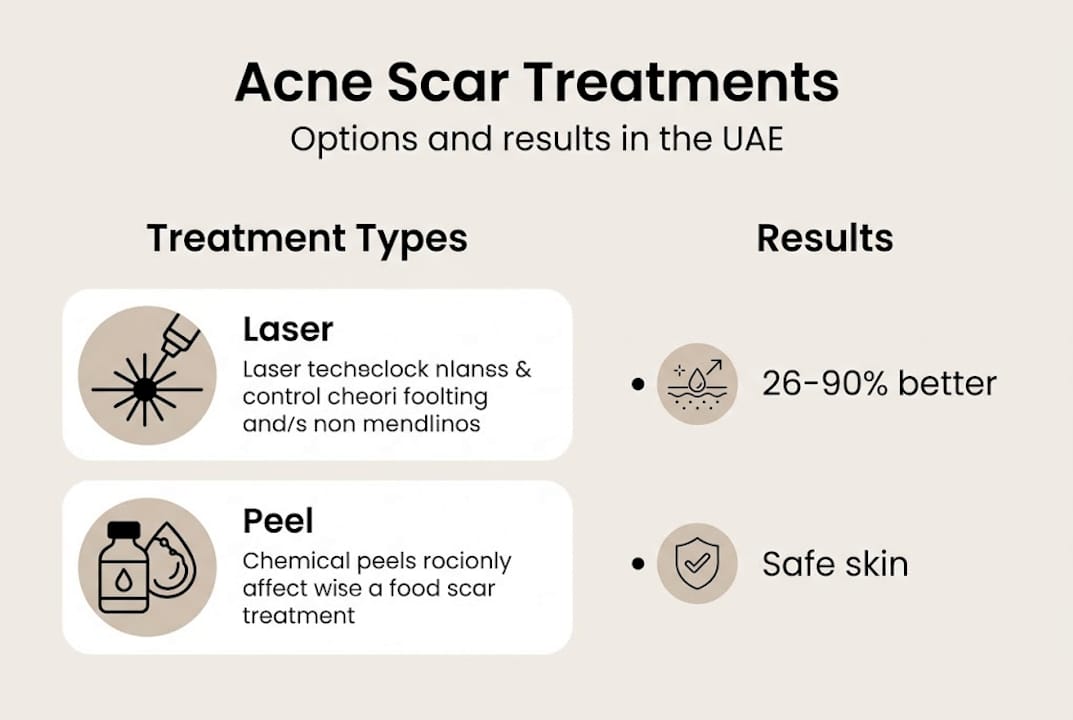
Fractional CO2 lasers achieve between 26% and 75% improvement in scar depth, with some studies reporting up to 90% efficacy over multiple sessions. Microneedling combined with PRP (platelet-rich plasma) stimulates natural collagen production and is particularly well-suited for darker skin tones because it creates controlled micro-injuries without heat damage. Collagen remodeling is the core mechanism behind the most effective scar treatments, whether delivered by laser, needles, or chemical agents.
| Treatment | Mechanism | Effectiveness | Best for skin type |
|---|---|---|---|
| Fractional CO2 laser | Ablative resurfacing, collagen induction | 26–90% improvement | Fitzpatrick I–III (with caution IV) |
| Microneedling + PRP | Micro-injury, platelet growth factors | Moderate to high | Fitzpatrick III–VI |
| Chemical peels | Exfoliation, cell turnover acceleration | Mild to moderate | All types (depth-dependent) |
| Subcision | Breaks fibrous bands beneath rolling scars | High for rolling scars | All types |
| Non-ablative laser | Gentle heat remodeling, no skin removal | Mild to moderate | Fitzpatrick IV–VI preferred |
For UAE residents with Fitzpatrick IV–VI skin tones, non-ablative options and microneedling are frequently prioritized because they carry a lower risk of triggering PIH. Ablative lasers, while powerful, need careful calibration and timing in this population.
Common patient concerns about scar treatments:
- Downtime: Ranges from zero (PRP, light peels) to 5–7 days (fractional laser)
- Pain level: Most procedures use topical numbing cream; discomfort is minimal to moderate
- Results timeline: Visible improvement typically begins after 4–6 weeks per session
Exploring options like chemical peels alongside top skin treatments in the UAE gives you a clearer picture of what to realistically expect from each approach.
Personalizing acne scar care in the UAE: Why one size doesn't fit all
Skin type is not just a category. It determines how aggressively a treatment can be applied, how long recovery takes, and how likely you are to develop new pigmentation after the procedure. In the UAE, where Fitzpatrick IV–VI skin tones are common, cookie-cutter protocols simply do not work.
Combination therapies consistently outperform single-modality treatments, particularly for complex scar patterns. A patient with rolling and boxcar scars might benefit from subcision to release the fibrous bands, followed by microneedling sessions to resurface the skin, followed by a light chemical peel to even out tone. Each step targets a different layer of the problem.
| Modality | PIH risk | Recommended for | Protocol note |
|---|---|---|---|
| Fractional laser (ablative) | Moderate to high | Lighter skin tones, Fitz I–III | Avoid peak UAE summer without strict SPF |
| Microneedling | Low | All scar types, Fitz IV–VI | 3–5 sessions, 4–6 weeks apart |
| Chemical peel (superficial) | Low to moderate | PIH, mild scarring | Avoid sun exposure 2 weeks post-treatment |
| Subcision | Very low | Rolling scars | Often combined with filler or PRP |
The practical questions you should ask your provider before starting any scar treatment:
- What type of scars do I actually have, and how does that affect the plan?
- Have you treated patients with my skin tone and scar pattern before?
- How will we manage PIH risk before, during, and after treatment?
- What does aftercare look like in practice, especially given UAE sun exposure?
- How many sessions do you realistically expect, and how will we measure progress?
Pro Tip: Strict daily SPF 50+ use is not optional after scar treatments in the UAE. Sun protection is the single most important aftercare step to protect your investment and prevent new PIH.
Reviewing cosmetic dermatology tips UAE and understanding post-treatment skin care will help you build habits that make a real difference in your long-term results.
A new mindset: Treating scars is a path to self-confidence, not just skin deep
There is a persistent belief that acne scars are simply something you learn to live with. At CosmoLaser, we disagree with that entirely. The patients who come through our doors are not being vain. They are addressing something that shapes how they interact with the world every single day.
Scars affect eye contact, the way you smile in photos, whether you put yourself forward for opportunities. Treating them is not a luxury. It is a practical investment in your quality of life.
We have also seen a misconception that advanced scar treatments are only accessible to a privileged few. That is not the reality of modern cosmetic dermatology in the UAE in 2026. Effective, personalized treatment is genuinely within reach for most people, and the emotional dividends tend to pay out far beyond what patients expect before they start.
The most meaningful results combine technical precision with emotional attentiveness. When a provider understands both your skin and your goals, the outcome goes far beyond texture improvement. Understanding why professional skin treatments are essential is the mindset shift that makes all the difference.
Expert support for your scar-free journey in the UAE
At CosmoLaser Medical Center in Sharjah, we specialize in personalized, evidence-based acne scar care designed specifically for the UAE's diverse skin tones and climate conditions. Our team assesses your unique scar profile and builds a plan that prioritizes both visible results and skin safety.
Whether you are exploring chemical peel for acne scars, advanced skin resurfacing, or a full suite of skin rejuvenation solutions, we will guide you through every step. Book a personalized consultation with our specialists today and take the first clear step toward skin you feel genuinely comfortable in.
Frequently asked questions
Can acne scars really be removed completely?
Total removal is uncommon, but modern treatments significantly reduce scar visibility, with improvement ranging 26–90% depending on scar type and treatment approach.
Is it safe for darker skin to get acne scar treatments in the UAE?
Yes, when performed by qualified specialists using appropriate protocols. Non-ablative lasers and low-depth microneedling are preferred for Fitzpatrick IV–VI skin tones to minimize PIH risk.
How many sessions are usually required for visible results?
Most UAE patients achieve meaningful improvement after 3 to 5 sessions, spaced 4 to 6 weeks apart, depending on scar depth and treatment type.
What if I already have post-inflammatory hyperpigmentation (PIH)?
PIH is highly treatable with specialized UAE protocols, but it requires targeted aftercare and safe modality selection to prevent recurrence after treatment.