
TL;DR:
- UAE residents should verify clinics’ licensing, practitioner credentials, and safety standards before treatments.
- Laser, injectables, and chemical peels offer personalized options for skin rejuvenation with varying downtime.
- Combining treatments under qualified supervision yields better, longer-lasting results in the UAE market.
The UAE's cosmetic treatment market is crowded, fast-moving, and full of promises. With over 1.6 million annual skin disorder cases driving a dermatology devices market valued at USD 1.2 billion in 2023, it's no surprise that clinics offering everything from lasers to injectables have multiplied across Sharjah, Dubai, and Abu Dhabi. But more choices also mean more risk. Residents are right to ask: Which treatments actually work? Which clinics are safe? And how do you cut through the marketing noise to find personalized, expert-led care that delivers real results?
Table of Contents
- How to evaluate skin treatments in the UAE
- Laser treatments: From resurfacing to pigment correction
- Injectables and regenerative therapies: Fresh options for rejuvenation
- Chemical peels, threads, and other advanced options
- When to choose each treatment: A comparison for UAE residents
- Beyond the brochure: What most guides miss about choosing skin treatments in the UAE
- Explore expert skin treatments at Cosmolaser Medical Center
- Frequently asked questions
Key Takeaways
| Point | Details |
|---|---|
| Prioritize DHA licensing | Only consider clinics and practitioners with Dubai Health Authority credentials for safe, legal skin care. |
| Understand your options | Laser, injectables, peels, and more each suit different needs and results—get the facts before choosing. |
| Consult before you commit | Always seek an expert consultation to match treatments to your skin type, especially in the UAE’s unique context. |
| Combine for optimal results | Many experts suggest blending technologies, like lasers with PRP, for maximal, natural-looking improvement. |
How to evaluate skin treatments in the UAE
Before booking any cosmetic procedure, you need a clear framework for separating trustworthy providers from risky ones. In the UAE, that framework starts with licensing.
DHA regulations require that all non-surgical cosmetic services be performed only by qualified personnel following strict clinical protocols. This means the clinic must hold a valid license, the practitioner must be certified for the specific procedure, and the equipment must meet defined maintenance and safety standards. Skipping this check is one of the most common mistakes patients make.
Here's what to look for before committing to any treatment:
- Licensing: The clinic and practitioner must display current DHA or relevant emirate health authority licenses.
- Patch testing: Any treatment involving lasers, chemical agents, or injectables should include a patch test or consultation to assess your skin's response.
- Infection control: Sterile, single-use equipment and clean treatment rooms are non-negotiable.
- Equipment maintenance records: Ask when the device was last serviced. Outdated or poorly maintained machines increase risk.
- Gender-matching requirements: Certain laser and IPL procedures in the UAE require gender-matched practitioners, so check clinic policies in advance.
- Practitioner credentials: Look for board-certified dermatologists or licensed aesthetic practitioners, not just trained technicians.
Pro Tip: Before your first visit, use a treatment safety checklist to ask the right questions. Clinics that welcome your questions are the ones worth trusting.
Choosing the right provider is not just about credentials on a wall. It's about whether they take time to understand your skin type, your goals, and your health history. A rushed consultation is a red flag, regardless of how impressive the clinic looks.
Laser treatments: From resurfacing to pigment correction
Laser therapy is one of the most requested device-based treatments in the UAE, and for good reason. Focused laser energy resurfaces skin, stimulates collagen production, and breaks down unwanted pigment with precision that topical products simply cannot match.
There are two main categories you'll encounter:
| Type | How it works | Downtime | Best for |
|---|---|---|---|
| Ablative laser | Removes outer skin layers | 5-10 days | Deep wrinkles, scars, severe sun damage |
| Non-ablative laser | Heats tissue without removing it | Minimal (1-2 days) | Mild pigmentation, tone, early aging signs |
Ablative lasers deliver more dramatic results but require more recovery time. Non-ablative options are popular for those who can't afford significant downtime, which is a real consideration for busy UAE residents.
Conditions commonly treated with laser include:
- Acne scars and post-inflammatory marks
- Melasma and hyperpigmentation
- Fine lines and surface wrinkles
- Enlarged pores
- Uneven skin tone from sun exposure
Skin type matters enormously here. The Fitzpatrick scale (a classification of skin tone from Type I to Type VI) guides which laser wavelength and intensity is safe for you. Darker skin tones, common across the UAE's diverse population, require careful calibration to avoid burns or post-treatment discoloration. Always confirm your provider understands this.
Pro Tip: Explore the full range of types of laser treatments available before your consultation. Knowing the terminology helps you ask smarter questions and avoid upsells you don't need.
DHA safety protocols for laser rooms include minimum room size requirements, mandatory protective eyewear for both patient and practitioner, and clearly defined professional roles. If a clinic skips any of these, walk out. For a deeper look at what the procedure involves, the skin resurfacing guide is a solid starting point.
Injectables and regenerative therapies: Fresh options for rejuvenation
Beyond lasers, many look to injectables and cutting-edge regenerative methods for subtle yet striking improvements. These treatments work differently from device-based options, targeting volume loss, muscle movement, and cellular renewal rather than surface texture.
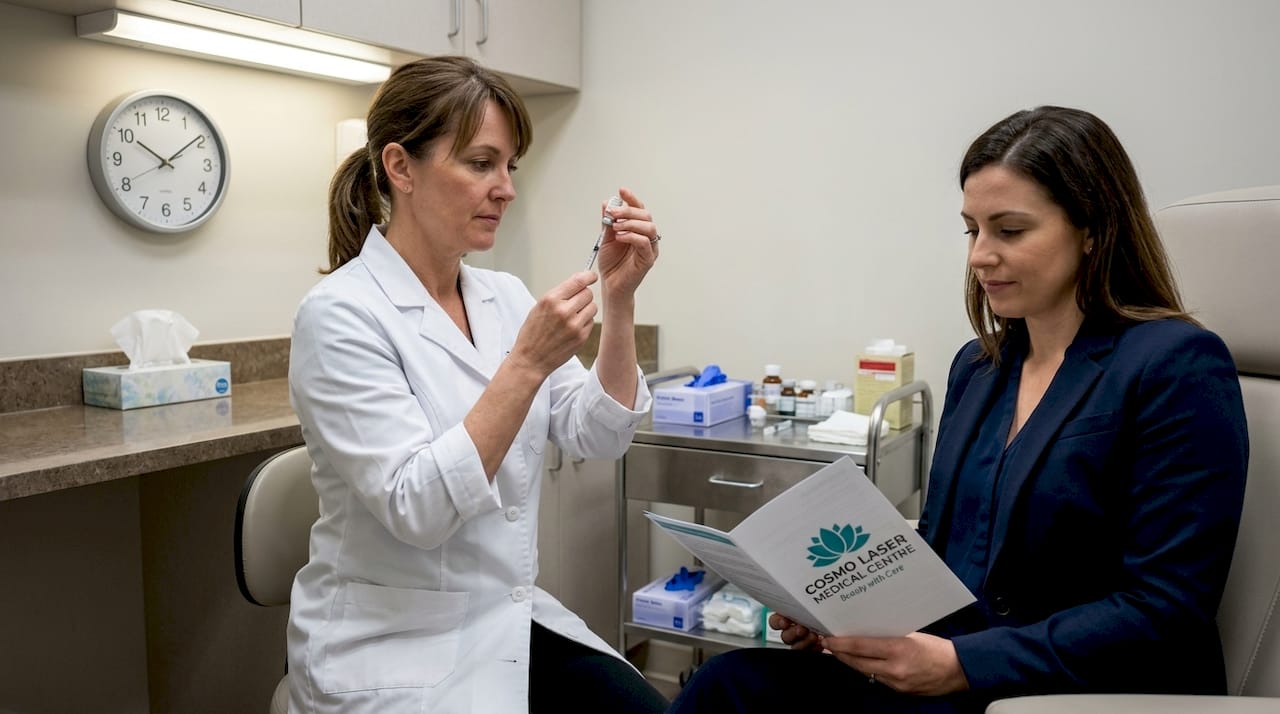
Botox works by temporarily relaxing the muscles responsible for dynamic wrinkles, those lines that form from repeated expressions like frowning or squinting. Results typically appear within 3-5 days and last 3-6 months. It's one of the most predictable treatments available when performed correctly.
Dermal fillers restore volume to areas that have lost fullness over time, such as the cheeks, lips, and under-eye hollows. Hyaluronic acid fillers are the most common type, valued for their natural feel and reversibility.
PRP (platelet-rich plasma) therapy takes a small sample of your own blood, concentrates the growth factors, and re-injects them to stimulate collagen and tissue repair. It's a regenerative approach with minimal allergy risk since it uses your own biology. PRP and skin boosters are restricted under DHA guidelines to specific treatment areas, with PRP limited to face and hair applications in licensed cosmetic settings.
Mesotherapy involves micro-injections of vitamins, enzymes, and hyaluronic acid into the middle layer of skin to improve hydration, tone, and texture.
Here's a quick overview of injectable options:
| Treatment | Primary use | Duration of results | Sessions needed |
|---|---|---|---|
| Botox | Dynamic wrinkles | 3-6 months | 1 per cycle |
| Dermal fillers | Volume restoration | 6-18 months | 1-2 |
| PRP | Skin renewal, hair | 6-12 months | 3-4 |
| Mesotherapy | Hydration, glow | 3-6 months | 4-6 |
Combining treatments, such as laser followed by PRP, can produce results that neither method achieves alone. Learn more about the full range of types of cosmetic treatments to understand which combinations make sense for your goals.
Chemical peels, threads, and other advanced options
Apart from the headline treatments above, some effective alternatives are attracting UAE residents looking for a gentler or more targeted approach.
Chemical peels use controlled acid solutions to exfoliate the skin at varying depths. They come in three levels:
- Superficial peels: Target the outer layer only; minimal downtime; great for dullness and mild acne.
- Medium peels: Reach the upper dermis; treat pigmentation, moderate wrinkles, and acne scars; 5-7 days recovery.
- Deep peels: Penetrate further for significant resurfacing; longer recovery but more dramatic results.
For residents dealing with acne or uneven tone, chemical peels for acne are one of the most cost-effective options available.
Thread lifts offer a non-surgical way to tighten sagging skin using dissolvable threads inserted under the skin. Results are immediate, with gradual improvement as collagen builds around the threads. Ideal candidates are those with mild to moderate skin laxity who aren't ready for surgery.
Pros of thread lifts:
- Instant visible lift
- No general anesthesia required
- Minimal downtime (2-3 days)
Cons:
- Results typically last 1-2 years
- Not suitable for significant sagging
- Requires a highly skilled practitioner
Microneedling creates controlled micro-injuries in the skin to trigger collagen production. It pairs well with PRP for enhanced results. LED therapy uses specific light wavelengths to reduce inflammation, stimulate repair, and address acne-causing bacteria without any downtime.
Market demand in the UAE is primarily driven by acne treatment needs, skin rejuvenation goals, and one of the highest levels of consumer awareness in the region.
This awareness means UAE residents are increasingly informed and selective, which is exactly why understanding your options matters.
When to choose each treatment: A comparison for UAE residents
Now that you're familiar with the menu of professional options, a clear comparison can help you match the right approach to your goals and lifestyle.
| Treatment | Best concern | Downtime | Avg. sessions | Relative cost |
|---|---|---|---|---|
| Ablative laser | Deep scars, wrinkles | 5-10 days | 1-3 | High |
| Non-ablative laser | Pigmentation, tone | 1-2 days | 3-5 | Medium |
| Botox | Dynamic wrinkles | None | 1 per cycle | Medium |
| Dermal fillers | Volume loss | Minimal | 1-2 | Medium-High |
| PRP | Skin renewal, hair | 1-2 days | 3-4 | Medium |
| Chemical peel | Acne, dullness | 0-7 days | 1-6 | Low-Medium |
| Thread lift | Mild sagging | 2-3 days | 1 | High |
| Microneedling | Texture, scars | 1-2 days | 3-6 | Low-Medium |
Key takeaways for smart decision-making:
| Your priority | Recommended path |
|---|---|
| Zero downtime | Non-ablative laser, Botox, LED therapy |
| Budget-conscious | Chemical peels, microneedling |
| Long-lasting volume | Dermal fillers |
| Natural regeneration | PRP, mesotherapy |
| Visible lift without surgery | Thread lift |
Combining treatment methods such as laser with injectables can provide superior, synergistic results when performed by qualified professionals in DHA-licensed centers. The key is working with a practitioner who designs a plan around your specific skin rather than pushing a standard package. For more guidance, these cosmetic dermatology tips offer practical direction for residents navigating the UAE market.
Beyond the brochure: What most guides miss about choosing skin treatments in the UAE
Comparison charts make decisions easier, but behind the data are realities every patient here should sit with.
The biggest risk in the UAE market isn't choosing the wrong treatment. It's choosing the wrong provider. Counterfeit filler products and unqualified practitioners operating in unlicensed settings are a real problem, and the damage they cause, whether scarring, infection, or asymmetry, is often harder to fix than the original concern. Always verify before you trust.
Another overlooked reality: skin care is not a one-time event. A single laser session won't undo years of sun damage. The residents who see the best long-term results are those who commit to a maintained, personalized plan, not those who chase one dramatic procedure.
Culturally attuned clinics also matter more than most people realize. Gender-matching policies, multilingual staff, and practitioners who understand the skin tones and concerns common across South Asian, Arab, and East African backgrounds make a genuine difference in outcomes. Clinics that offer safe laser procedures with these considerations built in aren't just more comfortable, they're more effective.
Finally, combination approaches consistently outperform single treatments. The synergy between methods is where the real results live.
Explore expert skin treatments at Cosmolaser Medical Center
Understanding your choices is the foundation, but working with the right practitioner is what brings your desired results to life.
At CosmoLaser Medical Center in Sharjah, every patient starts with a personalized skin assessment designed to match the right treatment to your unique concerns, skin type, and lifestyle. From skin resurfacing and Botox treatments to dermal fillers and regenerative therapies, all services are delivered by DHA-compliant specialists using clinically validated technology. There's no one-size-fits-all approach here. Whether you're targeting pigmentation, volume loss, or texture concerns, the team builds a plan that fits you. Book your consultation today and take the first step toward results you can actually see.
Frequently asked questions
What is the safest skin treatment for sensitive skin in the UAE?
Non-ablative lasers are safer for a wider range of skin types and carry less downtime, making them a strong starting point alongside hyaluronic acid-based injectables when administered by a DHA-licensed specialist after a thorough consultation.
How do I know if a UAE clinic is properly licensed for cosmetic procedures?
Only DHA-licensed clinics and certified professionals may legally offer non-surgical cosmetic procedures, and their credentials can be verified directly through the Dubai Health Authority's online verification portal.
Can skin treatments be combined for better results?
Yes. Combined approaches provide synergistic benefits and are often recommended by DHA-accredited clinics, with laser plus PRP or fillers being among the most effective pairings for comprehensive skin rejuvenation.
What are typical side effects of popular non-surgical skin treatments?
Patch testing and strict infection control minimize risks significantly, and most patients experience only temporary redness, mild swelling, or light soreness that resolves within a few days.