
TL;DR:
- Facial rejuvenation includes both surgical and non-surgical treatments targeting skin laxity, volume loss, and wrinkles.
- Combining proven modalities often yields better and longer-lasting results than individual treatments alone.
- Personalized, evidence-based protocols and experienced providers are key to safe and effective facial rejuvenation.
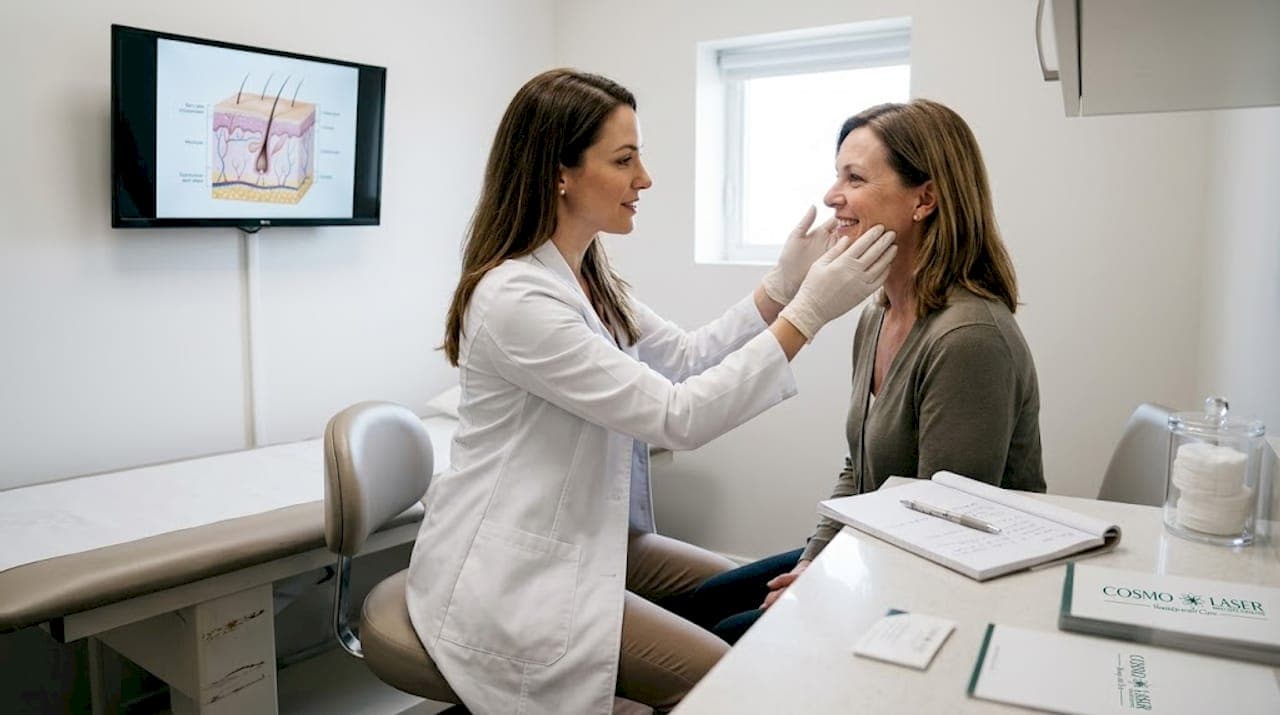
Facial rejuvenation has moved far beyond the dramatic before-and-after images you might scroll past online. Today, it's a science-backed field where surgical and non-surgical procedures work together to restore youthful features, improve skin quality, and boost confidence. Yet for many people across the UAE, the sheer number of options creates more confusion than clarity. Should you try Botox at 30 or wait until your 50s? Is laser right for your skin tone? Does "rejuvenation" just mean facelifts? This guide cuts through the noise, explains every major treatment category, and tells you what the evidence actually shows about real-world results.
Table of Contents
- Understanding facial rejuvenation: What does it really mean?
- Non-surgical facial rejuvenation: Methods and innovations
- Surgical facial rejuvenation: When are advanced procedures the right choice?
- The science behind facial rejuvenation: What actually changes your skin?
- Safety, risks, and choosing the right facial rejuvenation in the UAE
- Our honest take: What truly matters in facial rejuvenation today
- Explore facial rejuvenation options at Cosmolaser Medical Center
- Frequently asked questions
Key Takeaways
| Point | Details |
|---|---|
| Wide range of options | Facial rejuvenation includes both surgical and non-surgical procedures to revitalize the skin and features. |
| Science-backed benefits | Techniques like RF, HIFU, and injectables increase collagen and produce measurable improvements. |
| Safety is crucial | Choose board-certified, evidence-based providers to minimize risk and achieve the best outcomes in the UAE. |
| Personalize your approach | Results are best with treatments tailored to your aging stage, skin type, and personal goals. |
Understanding facial rejuvenation: What does it really mean?
Most people think facial rejuvenation is a single procedure. It isn't. It's a broad category that targets multiple visible signs of aging at once: sagging skin, loss of facial volume, fine lines, deep wrinkles, and uneven texture. The goal is to restore youthful contours, yes, but also to improve the overall health and quality of your skin.
A comprehensive review of anti-aging procedures confirms that facial rejuvenation encompasses both surgical and non-surgical approaches, each targeting different layers of the face and serving different patient profiles. This matters because it means there's no one-size-fits-all solution, and anyone telling you otherwise is oversimplifying.
Here's what facial rejuvenation actually addresses:
- Skin laxity: Loose or sagging skin caused by collagen loss over time
- Volume loss: Sunken cheeks, hollowed temples, and thinning lips
- Surface texture: Pigmentation, rough patches, large pores, and acne scarring
- Dynamic wrinkles: Expression lines around the eyes and forehead
- Static wrinkles: Lines visible even when your face is at rest
One of the biggest misconceptions? That rejuvenation is only for people in their 60s or 70s. Many of the most impactful results come from starting preventive treatments in your 30s, before significant volume loss or laxity sets in. Think of it the way you'd think about dental care: maintaining is always easier than restoring.
"Skin rejuvenation is not a luxury reserved for those who show visible aging. It's a proactive investment in your skin's long-term health and resilience."
If you're exploring skin rejuvenation in Sharjah, understanding this spectrum of options is your first step. And if you're new to the field, reviewing must-know aesthetic treatments can help you build a clearer picture of where to start.
Non-surgical facial rejuvenation: Methods and innovations
Non-surgical rejuvenation has become the most popular entry point for most patients, and for good reason. Results are often visible within days, downtime is minimal, and the risk profile is significantly lower than surgery.
Non-surgical approaches include injectables like botulinum toxin and dermal fillers, as well as energy-based devices such as radiofrequency (RF) and high-intensity focused ultrasound (HIFU), plus a wide range of laser platforms. Each works differently and suits a different concern.
Here's a quick breakdown of how to think about your options:
- Botulinum toxin (Botox): Relaxes the muscles that create dynamic wrinkles. Results last 3–6 months. Best for forehead lines, crow's feet, and brow lifting.
- Dermal fillers: Restore volume and smooth static lines using hyaluronic acid or other biocompatible materials. Results last 6–18 months depending on the product and area.
- RF and HIFU: Heat the deeper layers of skin to stimulate collagen production. No needles, no cuts. Results build over 2–3 months.
- Laser treatments: Target pigmentation, resurfacing, and collagen stimulation simultaneously. Extra care needed for darker skin tones.
| Treatment | Best for | Downtime | Duration of results |
|---|---|---|---|
| Botox | Dynamic wrinkles | None | 3–6 months |
| Dermal fillers | Volume loss, static lines | Minimal | 6–18 months |
| RF/HIFU | Skin laxity, firming | None | 12–24 months |
| Laser resurfacing | Texture, pigmentation | 3–7 days | 1–2 years |
Evidence consistently shows that combining these modalities produces better results than using any single treatment alone. For example, pairing Botox treatments with dermal fillers addresses both movement and volume simultaneously, which a single treatment simply cannot do. You can learn more about how to navigate this safely in our guide on cosmetic injectables safety.
Also worth noting: the UAE's climate means more UV exposure, which accelerates collagen breakdown. RF rejuvenation insights suggest energy-based devices can be particularly valuable in this context.
Pro Tip: Always choose board-certified providers for any injectable or device-based treatment. The difference between a great result and a serious complication often comes down to the skill and training of the person holding the syringe or device.
Surgical facial rejuvenation: When are advanced procedures the right choice?
There's a point where non-surgical options can only do so much. If you have significant skin laxity, deep jowling, or excess neck skin, surgery offers results that no amount of RF or filler can replicate.
The most established surgical options include:
- Facelift (rhytidectomy): Lifts and repositions facial tissues, removing excess skin for a dramatically rejuvenated appearance
- Neck lift: Targets sagging skin and muscle banding in the neck and jawline
- Fat grafting: Uses your own fat to restore volume lost to aging, with natural-looking and long-lasting results
- Brow lift: Repositions a drooping brow to open up the upper face
Facelift results typically last 8 to 12 years, making surgery one of the longest-lasting options in rejuvenation. That longevity comes at a cost though: recovery typically takes 2–4 weeks, and risks are meaningfully higher than non-surgical alternatives.

| Factor | Non-surgical | Surgical |
|---|---|---|
| Downtime | Hours to days | 2–4 weeks |
| Results duration | 6–24 months | 8–12 years |
| Ideal candidate | Mild–moderate laxity | Advanced laxity |
| Risk level | Low | Moderate–high |
Surgery is generally best suited for individuals in their 50s and above, or anyone with more advanced visible aging who wants a single, major transformation rather than ongoing maintenance. Using face fillers for volume restoration alongside surgical results can also extend outcomes and address any residual hollowing.
For a broader look at what's available, our breakdown of top facial treatments covers both surgical and non-surgical paths side by side. Always prioritize board-certified plastic surgeons with a documented track record in the surgical rejuvenation review literature.
The science behind facial rejuvenation: What actually changes your skin?
Every treatment claims to "stimulate collagen," but what does that actually mean? Here's what's happening beneath your skin when you undergo a rejuvenation procedure.
- Neocollagenesis: The production of new collagen fibers, triggered by heat, micro-injury, or biological signaling
- Elastogenesis: The synthesis of new elastin, which gives skin its snap-back quality
- Tissue remodeling: The reorganization of existing collagen into denser, more aligned structures
- Fibroblast activation: Skin cells called fibroblasts are stimulated to produce collagen, elastin, and hyaluronic acid simultaneously
Collagen remodeling science confirms that fibroblast activation and thermal stimulation are key drivers of rejuvenation outcomes across both surgical and non-surgical modalities.
Statistic callout: Multimodal protocols combining RF, HIFU, and microneedling can increase collagen levels by 39.53%, elastin by 130%, and hyaluronic acid by as much as 230%. These aren't small shifts. They represent measurable, structural changes to your skin.
Combination therapies outperform single treatments because they target multiple mechanisms at once. One device heats the dermis, another creates micro-channels for deeper product penetration, and an injectable stimulates immediate volumizing. The synergy matters.
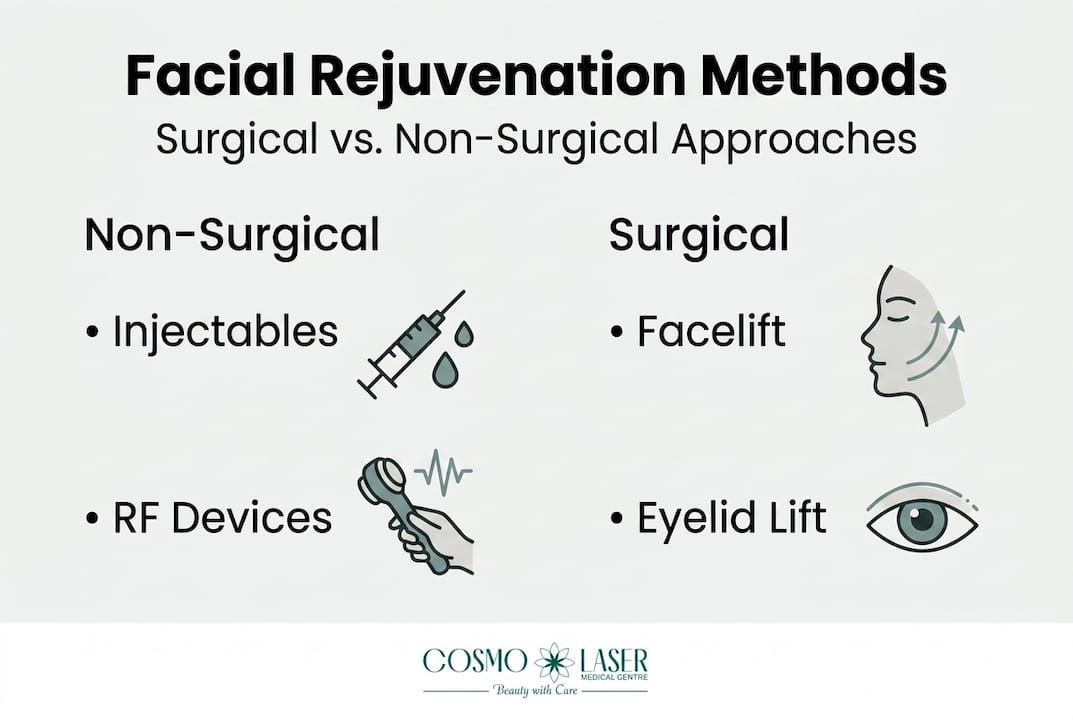
That said, not every "innovation" has the evidence to back it up. Exosomes and PRP (platelet-rich plasma) show promise, but the research is still limited compared to established modalities. Be cautious of clinics pushing unproven treatments as the next breakthrough. Our guide on non-surgical skin rejuvenation benefits offers a grounded look at what's proven versus what's trending.
Pro Tip: Look for clinics that base their treatment plans on published research and tailor protocols to your individual skin biology, not just your age or budget.
Safety, risks, and choosing the right facial rejuvenation in the UAE
No treatment is without risk. Being informed about what can go wrong is just as important as knowing what can go right.
Common risks across facial rejuvenation procedures include:
- Bruising and swelling: Almost universal with injectables, typically resolves within days
- Infection: Rare but possible, especially with skin-penetrating devices
- Vascular occlusion: A serious complication of filler injections where blood flow is blocked; requires immediate treatment
- Pigment changes: Particularly relevant for darker skin types undergoing laser treatments
- Ptosis: Eyelid drooping that can result from incorrectly placed Botox
Vascular occlusion and ptosis are among the most serious complications associated with fillers and Botox, making board-certified providers a non-negotiable requirement. Patient reviews, credentials, and emergency protocols matter enormously.
For UAE patients specifically, skin type is a critical variable. Fitzpatrick types IV to VI (common across South Asian, Arab, and African skin tones) require adjusted laser settings and more conservative energy levels to avoid hyperpigmentation or scarring. Always ask your provider how they adjust protocols for your skin type before agreeing to any laser or energy-based treatment. Check out our skin rejuvenation guide for UAE for more context on this.
Patient selection also shapes outcomes. Non-surgical methods work best for patients in their 30s to 50s with mild to moderate concerns. Surgery becomes the better choice when laxity is advanced. Matching the treatment to the actual concern, rather than choosing based on price or trend, is what separates good outcomes from disappointing ones. For more on what's available locally, explore top skin treatments UAE and review your options carefully before committing. Skin resurfacing safety is another area worth understanding if you're considering laser-based approaches.
Pro Tip: Ask any clinic you're considering about their emergency protocols, what happens if you have a reaction, and whether their treatment recommendations are backed by randomized controlled trials or robust clinical evidence.
Our honest take: What truly matters in facial rejuvenation today
After reviewing the evidence and working with patients across a wide range of skin types and concerns, one thing stands out clearly: the most impressive results rarely come from the most impressive-sounding device or the trendiest injectable. They come from thoughtful, layered protocols built around what each individual patient actually needs.
The industry moves fast. New technologies launch every season, each promising a revolution. But a well-designed combination of proven modalities, delivered by someone who understands your anatomy, your skin biology, and your lifestyle, consistently outperforms whatever's generating the most buzz at the moment.
Long-term success in facial rejuvenation is built on trust, realistic expectations, and a provider who is transparent about both what a treatment can and cannot do. Chasing the latest trend is expensive and often disappointing. Choosing an evidence-based, personalized approach is not.
If you want a practical starting point, our breakdown of comprehensive facial treatment options covers what's worth your time and money in the current landscape. Board-certified providers and research-backed protocols should be your baseline, not your ceiling.
Explore facial rejuvenation options at Cosmolaser Medical Center
If you're ready to move from research to results, CosmoLaser Medical Center in Sharjah offers the full spectrum of facial rejuvenation treatments, built around personalized, evidence-based protocols designed specifically for UAE skin types and lifestyles.
Whether you're exploring skin rejuvenation services, considering Botox treatments for dynamic wrinkles, or looking into dermal filler treatments for volume restoration, our board-certified specialists will design a plan tailored to your unique anatomy and goals. We use state-of-the-art technologies, follow published clinical protocols, and prioritize your safety at every step. Book a consultation today and get a clear, honest picture of what facial rejuvenation can realistically do for you.
Frequently asked questions
What is facial rejuvenation and how does it work?
Facial rejuvenation refers to a range of medical and cosmetic procedures designed to reverse visible signs of aging by tightening skin, restoring volume, and smoothing texture. Procedures range from simple injectables to complex surgery, depending on the patient's needs.
Are non-surgical treatments as effective as surgery for facial rejuvenation?
Non-surgical methods deliver strong results for mild to moderate aging concerns, but advanced skin laxity typically requires surgical intervention to achieve optimal, lasting outcomes.
What are the risks or side effects of facial rejuvenation procedures?
Risks include bruising, swelling, pigment changes, and more serious complications like vascular occlusion; choosing a qualified, experienced provider significantly reduces these risks.
How long do facial rejuvenation results typically last?
Most non-surgical treatments last 6–18 months, while surgical facelift results can maintain their effect for 8 to 12 years with proper aftercare.
Is facial rejuvenation safe for darker or sensitive skin types in the UAE?
Many procedures are safe for all skin types, but energy-based laser treatments require adjusted protocols for darker skin; always consult a provider who specializes in your skin type before proceeding.