
TL;DR:
- Proper post-peel care is essential for safe healing and optimal skin results.
- Avoid picking, sun exposure, and harsh products during recovery to prevent complications.
- Following professional guidance and maintaining a gentle routine ensures lasting, glowing skin.
You finally booked that chemical peel, sat through the treatment, and walked out feeling optimistic. Then day two hits: your skin is red, tight, and starting to flake in places you never expected. This is where most people make their biggest mistakes. The truth is, a chemical peel is only half the equation. What you do in the days and weeks after the treatment determines whether you end up with genuinely glowing skin or a frustrating round of pigmentation and prolonged redness. This guide walks you through every step of proper aftercare so your skin heals fast, safely, and beautifully.
Table of Contents
- What you need to know before your chemical peel
- Essential supplies for chemical peel aftercare
- Step-by-step guide: Chemical peel aftercare routine
- Common mistakes and troubleshooting after a chemical peel
- What to expect: Recovery timeline and results
- Our expert perspective: Why aftercare makes all the difference
- Ready for flawless skin? Explore advanced care options in Sharjah
- Frequently asked questions
Key Takeaways
| Point | Details |
|---|---|
| Proper aftercare is crucial | How you care for your skin post-peel determines your results and reduces complications. |
| Prepare ahead of time | Gather recommended supplies and set realistic expectations before your procedure. |
| Avoid common mistakes | Protect your healing skin with sunscreen, avoid picking, and follow all provider instructions. |
| Monitor recovery closely | Know what’s normal in the healing timeline and when to seek professional help. |
What you need to know before your chemical peel
Before diving into step-by-step aftercare, let's cover what you need to know and prepare to get the best results from your chemical peel.
Not all chemical peels are the same, and not all skin types respond the same way. Superficial peels, like those using glycolic or salicylic acid, cause mild exfoliation and minimal downtime. Medium-depth peels, often using trichloroacetic acid (TCA), penetrate deeper and require more recovery time. Deep peels are the most aggressive and demand strict medical supervision. Knowing which type you received matters enormously because it shapes the entire aftercare plan.
Before your treatment, your dermatologist should have a detailed conversation with you about your skin type and medical history. This is not just a formality. Certain medications like retinoids, blood thinners, and hormonal treatments can interfere with how your skin heals. Conditions like eczema, rosacea, or a history of cold sores may require special preparation or even delay your peel. Being transparent with your provider protects you from unnecessary complications.
Key things to prepare and discuss beforehand:
- Your complete list of current medications and supplements
- Any history of cold sores, eczema, or keloid scarring
- Whether you've used retinol or prescription retinoids recently
- Your skin's history with sun damage and hyperpigmentation
- Realistic expectations for how much peeling and redness to expect
Setting realistic expectations is just as important as gathering your supplies. Many people expect an immediate dramatic transformation and are shocked by the raw, sensitive skin they see in the mirror on day two or three. Understanding the healing phases, from initial redness to flaking to the reveal of fresh skin, helps you stay calm and consistent with your routine. Learn more about safe skin care treatments to understand how peels compare with other options.
| Peel depth | Common acids used | Recovery time | Downtime level |
|---|---|---|---|
| Superficial | Glycolic, salicylic | 3 to 5 days | Minimal |
| Medium | TCA, Jessner's | 7 to 10 days | Moderate |
| Deep | Phenol | 14 to 21 days | Significant |
Pro Tip: Do a full "aftercare supply run" the day before your treatment so you're not scrambling to find the right products when your skin is already sensitive and reactive.
Essential supplies for chemical peel aftercare
Now that you know what to expect, let's make sure you have all the essentials ready before your treatment.
Walking into recovery without the right products is like driving without GPS. You might eventually get there, but the detours can cause real damage. Hydration and sun protection are crucial for successful aftercare, and assembling your kit in advance removes the temptation to grab whatever is on your bathroom shelf in a moment of panic.
Your essential aftercare supply list:
- Gentle, fragrance-free cleanser: Look for a pH-balanced formula designed for sensitive or post-procedure skin. Avoid anything with sulfates, alcohol, or exfoliating beads.
- Hydrating moisturizer: Choose one with ceramides, hyaluronic acid, or petrolatum as key ingredients. These rebuild the skin's natural barrier while it's most vulnerable.
- Broad-spectrum sunscreen SPF 30 or higher: A mineral sunscreen containing zinc oxide or titanium dioxide is ideal because it sits on top of the skin rather than being absorbed. Chemical sunscreens can sting freshly treated skin.
- Non-irritating, mineral-based makeup (optional): If you need to go out during recovery, mineral powder or mineral-based foundation minimizes irritation. Hold off until peeling has fully stopped.
- Soft towels and clean pillowcases: Rough textures create micro-trauma on healing skin. Change your pillowcase every one to two days to reduce bacterial contact while your skin barrier is compromised.
| Product | What to look for | What to avoid |
|---|---|---|
| Cleanser | Fragrance-free, pH-balanced, cream-based | Sulfates, alcohol, scrubs |
| Moisturizer | Ceramides, hyaluronic acid, petrolatum | Retinol, AHAs, fragrances |
| Sunscreen | Mineral, SPF 30+, zinc oxide | Chemical filters (avobenzone), heavy fragrances |
| Makeup | Mineral-based, non-comedogenic | Liquid foundations, setting sprays with alcohol |
Pro Tip: Keep a small bottle of thermal spring water spray in the fridge. A cool mist every few hours soothes tightness and reduces that uncomfortable "dry, pulling" sensation that peaks around day two and three.
You can find comprehensive aftercare tips for a wide range of skin treatments on the CosmoLaser blog, which is especially useful if you plan on combining your peel with other procedures.
Step-by-step guide: Chemical peel aftercare routine
With supplies on hand, follow these step-by-step instructions to ensure your best possible recovery.
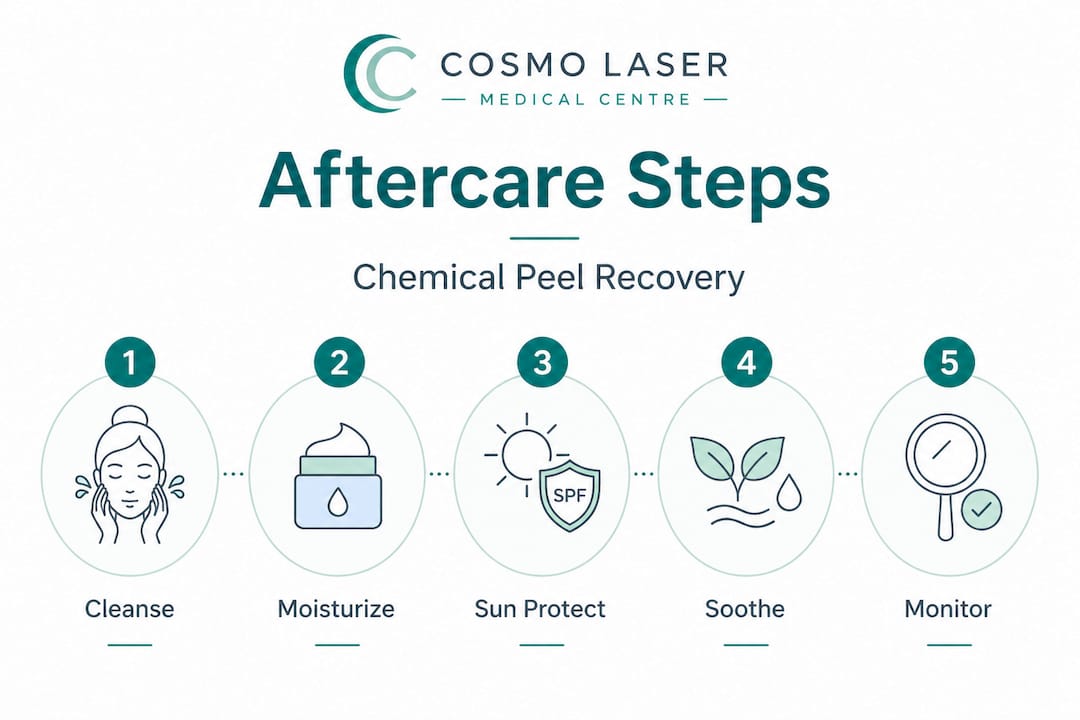
Following aftercare protocols reduces the risk of side effects and speeds up healing significantly. Consistency is everything here. Skipping one step on one day might feel harmless, but your skin's barrier is trying to rebuild itself around the clock and needs reliable support.
Your daily aftercare routine:
- Cleanse gently twice a day. Use lukewarm (not hot) water and your fragrance-free cleanser. Wet your fingertips and apply in soft, circular motions. Never rub or apply pressure. Pat dry with a clean, soft towel.
- Apply moisturizer immediately after cleansing. The goal is to lock in moisture while the skin is still slightly damp. Use a generous layer and let it absorb fully before touching your face again.
- Apply sunscreen every morning. Even indoors, UV rays penetrate windows. Apply your mineral SPF 30 or higher as the final step in your morning routine. Reapply every two hours if you go outside.
- Avoid touching your face unnecessarily. Your hands carry bacteria that can cause infections on healing skin. The less you touch, the better.
- Skip makeup for the first week. Even mineral makeup can clog pores or irritate delicate new skin cells. If you absolutely must, wait until flaking has completely stopped and consult your provider.
- Stay away from pools, saunas, and steam rooms. Chlorine, heat, and steam disrupt healing and increase the risk of irritation or infection during the first seven to ten days.
- Do not pick, scratch, or peel flaking skin. This is the hardest rule for most people. Peeling skin must fall off on its own timeline. Forcing it off tears the new skin underneath, which can lead to scarring or uneven texture.
Important: If you experience intense burning, blistering, or signs of an allergic reaction at any point, stop all products and contact your clinic immediately. Never try to manage a severe reaction at home.
Healing safely is a process that rewards patience. Think of your skin like a sunburn that is being treated medically. Gentle, consistent care over seven to fourteen days will yield far better results than rushing back to your normal routine. A detailed treatment checklist can also help you stay organized across all stages of recovery.
Common mistakes and troubleshooting after a chemical peel
Even with the best routine, mistakes happen. Here's how to avoid them and respond quickly to problems.
Improper aftercare can lead to infection, scarring, and pigmentation issues. Understanding the most common errors helps you recognize when you might be drifting off course, and course-correct before the consequences become serious.
Mistakes that slow or damage your recovery:
- Picking or scratching peeling skin. This is the number one mistake and the one with the most serious consequences. Removing skin prematurely creates open wounds, increases infection risk, and can leave permanent scars or dark spots.
- Skipping sunscreen. UV exposure on freshly peeled skin is one of the fastest routes to post-inflammatory hyperpigmentation (PIH). Even a short unprotected errand can leave a dark patch that takes months to fade.
- Returning to active skincare products too soon. Retinol, AHAs, BHAs, and vitamin C serums are great for normal skin maintenance but genuinely damaging to post-peel skin. Wait at least two weeks before reintroducing any actives, and only do so with your provider's approval.
- Using hot water when cleansing. Heat causes blood vessels to dilate, which increases redness and inflammation. Lukewarm water only.
- Neglecting your provider's specific instructions. General guides like this one are a solid foundation, but your provider tailored their advice to your skin type and peel depth. Their instructions override everything else.
Warning sign: If you notice pus, a sudden increase in redness after the first few days, warmth that spreads beyond the treated area, or a fever, these are signs of infection. Contact your clinic immediately. Do not wait to see if it resolves on its own.
For people concerned about long-term outcomes like uneven texture or residual scarring, looking into scar removal tips can give you a sense of what corrective options exist if healing does not go as planned.
What to expect: Recovery timeline and results
After following proper aftercare, here's what a typical recovery and outcome look like.

Understanding the timeline removes the anxiety that comes with each new symptom. What feels alarming on day three is often completely normal and expected. Proper care delivers smoother, healthier skin within 7 to 14 days for most people who follow instructions consistently.
| Days post-peel | What you'll experience | What to do |
|---|---|---|
| Day 1 to 2 | Redness, tightness, mild swelling | Moisturize frequently, avoid sun |
| Day 3 to 5 | Peeling and flaking begins | Do NOT pick; keep skin hydrated |
| Day 5 to 7 | Peeling peaks, new skin visible underneath | Gentle cleansing, heavy moisturizer |
| Day 7 to 14 | Skin smooths out, brightness appears | Reintroduce sunscreen diligently |
| After day 14 | Full results visible, skin noticeably renewed | Consult provider before adding actives back |
Signs your recovery is on track:
- Redness fades steadily after day three
- Peeling slows and stops within seven to ten days
- Skin feels softer and looks more even-toned
- No unusual pain, warmth, or discharge
Signs you should contact your clinic:
- Severe swelling that increases after day two
- Blistering, especially fluid-filled blisters
- Signs of infection including pus or spreading redness
- Skin that has not started improving after ten days
Once your skin has fully healed, you'll find a world of rejuvenation treatments available to maintain and enhance your results. Many patients combine chemical peels with other radiant skin options for a more complete skin transformation over time.
Our expert perspective: Why aftercare makes all the difference
From clinical experience, the most consistent thing we observe is this: two patients can receive the exact same peel on the same day and walk away with dramatically different results. The procedure itself is only one variable. The other is what each person does in the days and weeks that follow.
We see it constantly. Patients who follow expert aftercare guidance arrive at their follow-up appointment with skin that is visibly smoother, more even, and genuinely luminous. Patients who cut corners, who pick at their skin, skip sunscreen, or return to harsh actives too early, often come back frustrated, dealing with new pigmentation issues or uneven texture that requires additional treatment to correct.
Here's the uncomfortable truth: shortcuts after a chemical peel can cost you more in the long run. Not just money on corrective treatments, but months of frustration watching avoidable damage slowly fade. The peel is an investment. Aftercare is what protects that investment. Skipping it is like buying a premium car and never changing the oil.
We also strongly believe that professional guidance is not optional for first-time peel patients. Reading articles and following product labels helps, but nothing replaces a provider who has seen hundreds of post-peel recoveries and can immediately distinguish between normal peeling and the early signs of a complication. The long-term benefits of a well-done chemical peel are genuinely significant, but they depend entirely on the quality of care during recovery. Treat that recovery period with the same seriousness you gave to booking the appointment in the first place.
Ready for flawless skin? Explore advanced care options in Sharjah
You've done the reading and now you know exactly what proper aftercare looks like. Taking that knowledge from the page to real, glowing results is where expert support makes the biggest difference.

At CosmoLaser Medical Center in Sharjah, our specialists build custom peel plans that account for your skin type, goals, and lifestyle, and then guide you through recovery every step of the way. Whether you're exploring skin resurfacing in Sharjah for the first time or looking to maintain long-term results, our team is here to support your journey. Browse our chemical peel services to see what's available, or explore our full range of skin rejuvenation treatments to find the right combination for your skin goals. Book your consultation today and let us help you get there safely.
Frequently asked questions
How long should I avoid sun exposure after a chemical peel?
Avoid direct sun for at least two weeks post-peel and apply a high-SPF sunscreen every day throughout recovery, since post-peel sun avoidance is one of the most critical factors for optimal healing.
When can I start using makeup after a chemical peel?
Wait at least one full week or until all peeling and redness have completely resolved, as makeup should resume only after your skin has fully healed to avoid irritation or clogged pores.
Is it normal for my skin to feel tight or itchy after a chemical peel?
Yes, tightness and mild itching are typical post-peel reactions and usually resolve within a few days, but you should call your clinic if symptoms become severe or worsen after day three.
What should I do if I notice signs of infection after my peel?
Contact your provider immediately if you see pus, spreading redness, or pronounced swelling, since early professional help at the first signs of infection can prevent serious complications.