
TL;DR:
- Acne scars are structural skin changes requiring precise diagnosis for effective treatment.
- Tailored treatments like TCA CROSS, microneedling, and laser work best based on scar type and skin tone.
- Combining therapies and early intervention optimize results, especially in UAE's diverse skin conditions.
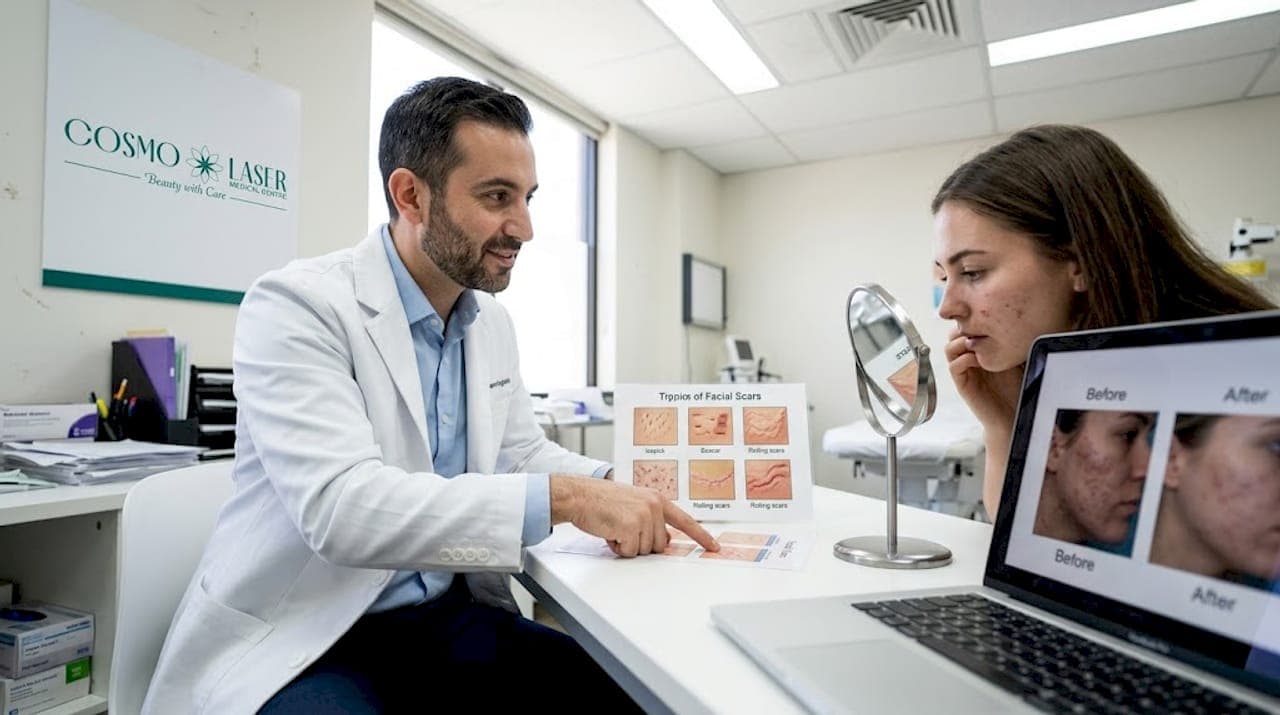
Most people assume acne scars are just marks that fade with time or a good moisturizer. They are not. Acne scars are structural changes in the skin, and treating them without knowing exactly what type you have is like fixing a crack in a wall by repainting it. In the UAE, where diverse skin tones, intense sun exposure, and high humidity create a unique dermatological environment, choosing the right approach matters even more. This guide breaks down the different scar types, the most effective treatments available right now, and how to set realistic expectations so you can make a truly informed decision.
Table of Contents
- Types of acne scars and why they matter
- Top acne scar removal treatments in the UAE
- Personalizing treatment: Skin type, gender, and combination therapy
- Results, expectations, and safety in the UAE
- What most guides miss about acne scar removal in the UAE
- Discover your best next step with Cosmolaser
- Frequently asked questions
Key Takeaways
| Point | Details |
|---|---|
| Scar type determines treatment | Identifying your scar type is crucial for choosing the most effective removal method. |
| UAE skin needs special care | Darker skin and strong sunlight in the UAE increase the risk of pigmentation, requiring tailored solutions. |
| Combination therapy works best | Mixing treatments like microneedling, chemical peels, and TCA provides better results for stubborn scars. |
| Expect improvement, not perfection | Professional treatments can significantly fade acne scars, but full removal is rare. |
Types of acne scars and why they matter
Not all acne scars look the same under a dermatologist's light. Understanding the differences is the first step in any effective treatment plan, and it is why a proper clinical assessment is non-negotiable before anything else happens to your skin.
Acne scars fall into two broad categories: atrophic and hypertrophic. Atrophic scars are the most common by far. According to research published in 2025, acne scars are mainly atrophic, 75-90%, falling into three distinct subtypes. Hypertrophic scars, which are raised and thickened, are comparatively rare in UAE patients.
Here is how the three atrophic subtypes differ:
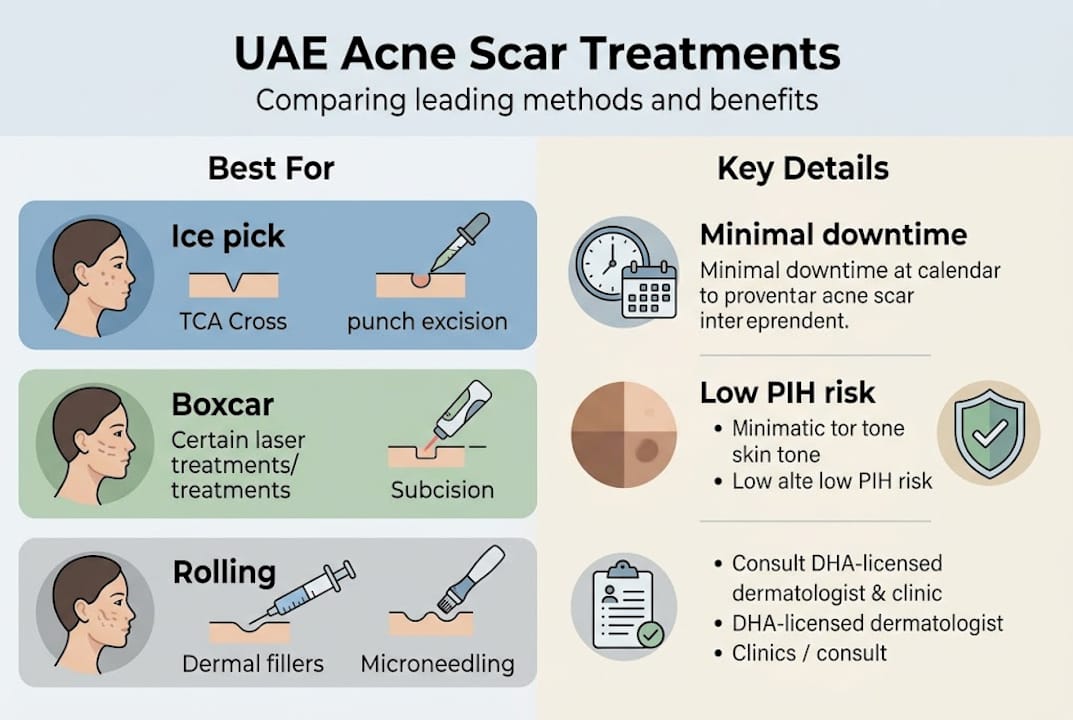
- Ice pick scars: Deep, narrow, and pitted. They make up roughly 60-70% of atrophic scars. Think of a tiny puncture wound that healed inward.
- Boxcar scars: Wider, with sharp vertical edges and a flat base. They account for about 20-30% of cases and often appear on the cheeks and temples.
- Rolling scars: Shallow but broad, with a wave-like or undulating surface caused by fibrous tissue pulling the skin downward. These represent around 15-25% of atrophic scarring.
| Scar type | Appearance | Depth | Common location |
|---|---|---|---|
| Ice pick | Narrow, deep pits | Deep | Cheeks, nose |
| Boxcar | Wide, defined edges | Moderate | Cheeks, temples |
| Rolling | Wavy, sloped | Shallow | Jaw, cheeks |
| Hypertrophic | Raised, thickened | Surface | Chest, back, jaw |
Why does this classification matter so much? Because each type responds to completely different treatments. An ice pick scar requires a technique that reaches deep into the follicular canal. A rolling scar needs something that releases the tethered fibrous bands underneath. Treating them the same way wastes time and money and can make things worse.
There is another layer specific to UAE patients: post-inflammatory hyperpigmentation, or PIH. PIH is not technically a scar, but it commonly coexists with scarring and is far more pronounced in darker skin tones, which are prevalent across South Asian, Arab, and African communities in the UAE. PIH appears as flat, dark patches left after inflammation and can easily be confused with true scarring. Treating PIH requires a different strategy entirely. Understanding the full scar removal workflow from diagnosis through aftercare is what separates effective treatment from guesswork.
Top acne scar removal treatments in the UAE
Once you know your scar type, you can match it to a treatment that actually has the science behind it. The UAE's cosmetic dermatology scene has kept pace with global advances, giving you access to a broad and effective toolkit.
Here is a breakdown of the leading options:
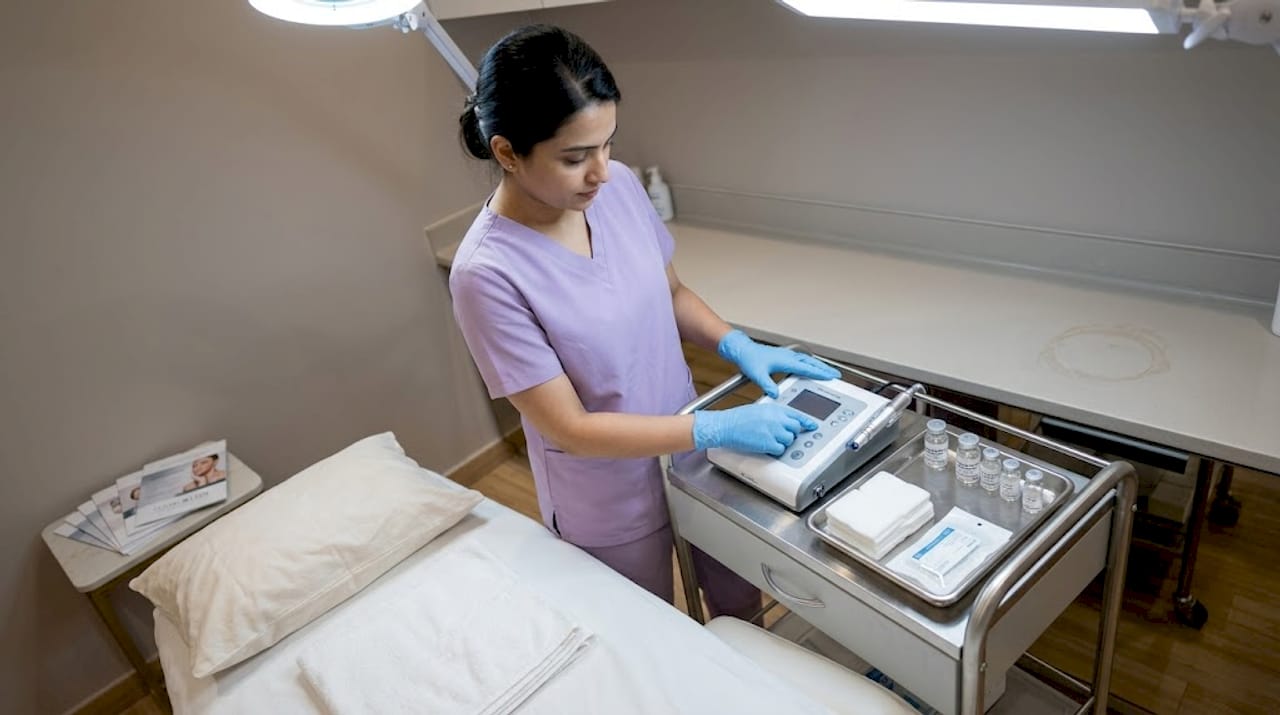
- TCA CROSS: Trichloroacetic acid (TCA) chemical reconstruction of skin scars is the gold standard for ice pick scars. It involves applying a high-concentration TCA directly into the scar channel to trigger controlled collagen remodeling. Studies confirm it is 65-100% effective for ice pick scars, even in darker skin types, making it highly relevant for UAE patients.
- Chemical peels: Glycolic acid (GA) and medium-depth TCA peels work well for surface-level PIH, mild boxcar scars, and general texture improvement. A tailored chemical peel for acne scars is often the first step in a multi-phase protocol.
- Microneedling: Creates controlled micro-injuries to stimulate collagen without significant heat. It is well-tolerated across all Fitzpatrick skin types and particularly useful for rolling and shallow boxcar scars.
- Subcision: A minimally invasive procedure where a needle is inserted under the skin to physically break the fibrous bands causing rolling scars. Often combined with fillers for added volume restoration.
- CO2 and ablative lasers: Highly effective for moderate to severe atrophic scars but carry elevated PIH risk in darker skin. Fractional settings reduce risk compared to fully ablative modes.
- Non-ablative lasers and RF microneedling: Better suited for darker UAE skin tones. They stimulate collagen through heat without removing the top skin layer.
- PRP therapy: Platelet-rich plasma is derived from your own blood and injected to accelerate healing and collagen production. Often used alongside microneedling for a synergistic effect.
| Treatment | Best for | Downtime | PIH risk in dark skin |
|---|---|---|---|
| TCA CROSS | Ice pick | Minimal | Low |
| Subcision | Rolling | 2-5 days | Low |
| RF microneedling | Rolling, boxcar | 1-3 days | Low |
| CO2 laser | Boxcar, rolling | 7-14 days | Moderate-high |
| Chemical peel | PIH, mild scars | 3-7 days | Moderate |
Pro Tip: Never start with the most aggressive treatment available. A skilled dermatologist will often begin with lower-risk options and escalate only if needed. Jumping straight to ablative CO2 laser on darker UAE skin without proper skin prep can set your treatment back by months.
For a detailed look at how skin resurfacing integrates into a full scar treatment plan, it helps to consult with a clinic that understands both the technology and the patient demographics.
Personalizing treatment: Skin type, gender, and combination therapy
The right treatment for someone in London may be the wrong one for someone in Sharjah. Local factors genuinely shift what works, and ignoring them is one of the most common reasons people walk away from treatment disappointed.
Skin tone and Fitzpatrick type are the most critical variables. Darker UAE skin favors non-ablative and RF microneedling techniques over ablative lasers, and active acne should always be fully controlled before beginning scar treatment. Here is why: inflamed skin is already triggered, and applying heat or chemical energy to it amplifies that inflammation, worsening both scarring and PIH.
Factors that shape your personalized protocol include:
- Fitzpatrick skin type: Types IV-VI (common in South Asian, Arab, and African UAE residents) need lower-energy, non-ablative approaches to avoid PIH.
- Sun exposure: UAE's intense sun means post-treatment sun protection is not optional. Unprotected skin after a peel or laser session can develop dark patches within days.
- Humidity: High humidity can affect wound healing speed and bacterial load post-procedure, requiring adjusted aftercare protocols.
- Active acne status: Treating scars while breakouts are still occurring is counterproductive. New acne keeps creating new damage.
Gender also plays a meaningful role. Males experience more severe scarring on average, partly due to androgenic hormones increasing sebaceous gland activity, and partly because men tend to seek treatment later. For men navigating this, there is strong guidance available on aesthetic treatments for men that addresses both severity and realistic outcomes. Those interested in broader routines can also explore men's skin care in the UAE.
"Combination therapy is where results actually happen. A single modality rarely gives you the improvement patients are looking for. The magic is in sequencing the right treatments in the right order for that individual's skin."
Combination therapy is now the standard of care for moderate to severe acne scarring. A typical protocol might layer TCA CROSS for ice pick scars in session one, RF microneedling for rolling and boxcar scars in sessions two and three, and a PRP booster at the final stage to consolidate collagen gains. Each treatment addresses a different structural problem, and together they produce results that no single treatment can match alone.
Results, expectations, and safety in the UAE
Here is an uncomfortable truth: acne scar removal does not mean scar erasure. It means meaningful, visible improvement. Understanding what "successful" treatment actually looks like prevents disappointment and builds realistic confidence in the process.
What you can realistically expect:
- Improvement in scar grade: Most patients see a reduction of one to two grades on standardized scar severity scales after a full treatment course.
- Gradual results: Collagen remodeling is a slow biological process. You will not wake up after session one with smooth skin. The biggest changes typically appear at weeks 8-12.
- Multiple sessions: Most protocols require 3-6 sessions spaced 4-6 weeks apart, depending on scar severity and treatment type.
- PIH management: For darker skin types, your dermatologist may introduce a topical brightening protocol using agents like azelaic acid or low-strength retinoids between sessions to suppress PIH formation.
- Maintenance: Even after a full course, skin continues to age and sustain new damage. Annual maintenance sessions often preserve results.
Pro Tip: Ask your dermatologist to photograph your skin under consistent lighting at every session. Progress often feels invisible month to month but becomes striking when you compare session one to session six.
Combination approaches using subcision, microneedling, and TCA improve severe scars significantly, and early acne treatment reduces the extent of later scarring. This is why timing matters. The earlier you address active breakouts and begin supervised scar management, the less structural damage accumulates. Understanding why professional skin treatments outperform over-the-counter approaches is especially relevant when dealing with atrophic changes that go below the epidermis.
Side effects vary by procedure. RF microneedling typically causes redness for one to three days. Subcision may cause temporary bruising for up to a week. CO2 laser, when used, requires up to two weeks of healing. None of these are reasons to avoid treatment. They are reasons to plan it properly around your schedule and lifestyle.
What most guides miss about acne scar removal in the UAE
Most acne scar articles you will find online were written with a North American or European patient in mind. They reference ablative CO2 laser as the default answer for moderate scarring, largely because it performs well on lighter skin with less PIH risk. That recommendation, applied without adjustment to UAE skin tones, causes harm more often than it helps.
The real gap is not in treatment technology. The UAE has access to the same equipment as any leading dermatology center in the world. The gap is in individualized clinical judgment. A clinic that runs the same laser setting on every patient regardless of skin tone or scar depth is not practicing advanced dermatology. It is running a production line.
Ignoring active acne during scar treatment is the second most common error we see. Patients come in frustrated that their results are inconsistent, and it often traces back to new inflammatory lesions forming mid-protocol. Following a personalized scar removal workflow that accounts for UAE-specific skin variables produces outcomes that generic global protocols simply cannot replicate. Local expertise, not international trend-chasing, is what actually moves the needle.
Discover your best next step with Cosmolaser
At CosmoLaser Medical Center in Sharjah, we approach acne scar removal the way it should be approached: starting with an honest assessment of your scar types, skin tone, and lifestyle before any treatment is recommended.
Our team uses evidence-based, UAE-adapted protocols covering everything from TCA CROSS and RF microneedling to combination therapies designed for darker Fitzpatrick skin types. We do not apply a global template to a local problem. If you are ready to understand what your skin actually needs, explore our approach to cosmetic dermatology in the UAE or book a consultation to discuss tailored skin resurfacing treatments that fit your specific goals and skin profile.
Frequently asked questions
Which acne scar removal treatment works best for dark skin in the UAE?
For dark UAE skin, non-ablative and RF microneedling offer the best balance of effectiveness and low PIH risk, while TCA CROSS remains the top choice specifically for ice pick scars.
How long does it take to see results from professional acne scar treatments?
Most patients notice meaningful improvement after 3-6 sessions, with visible changes becoming clear around the 2-3 month mark. Combination staged treatments consistently produce the most noticeable outcomes.
Are home remedies effective for acne scar removal?
Home remedies cannot address the structural skin changes caused by atrophic scars. Professional therapy is required for any meaningful reduction in ice pick, boxcar, or rolling scars.
Is there a way to prevent acne scars from forming?
Early acne treatment and avoiding picking or squeezing inflamed lesions are the most effective ways to prevent scar development and limit severity.