

TL;DR:
- Personalized skincare uses diagnostics and science to tailor treatments to individual skin factors.
- Advanced technologies like AI, genetic testing, and 3D mapping drive accurate, effective treatments.
- True personalization benefits complex conditions; consumers should demand transparency and ongoing reassessment.
Most people in the UAE have tried at least three or four skincare products that promised visible results, only to see little change. The frustrating reality is that generic skincare routinely underperforms because it treats every face the same. Your skin is shaped by your genetics, the Sharjah climate, your diet, your hormones, and dozens of other individual factors. Personalized skin care flips this logic entirely. It uses real diagnostics and science to build a plan around your exact skin profile, not a broad demographic. This article breaks down what that actually means, how the technology works, what results are realistic, and where the hype ends.
Table of Contents
- What does personalized skin care mean?
- Science behind personalized skin care: Methods and technologies
- How effective is personalized skin care? What the evidence shows
- Limitations, risks, and how to avoid the hype
- Our perspective: Personalized skin care is powerful, if you cut through the noise
- Explore advanced, evidence-based skin care in Sharjah
- Frequently asked questions
Key Takeaways
| Point | Details |
|---|---|
| True personalization uses diagnostics | Modern personalized skincare relies on science-based tools like genetic analysis, AI, and 3D mapping to target your skin’s real needs. |
| Effectiveness varies by case | Results are best for complex or stubborn skin conditions, with less value for mild concerns compared to generic routines. |
| Be wary of marketing hype | Many supposedly custom solutions aren’t truly unique and may not outperform standard evidence-based treatments. |
| Professional oversight matters | Clinical guidance ensures the technologies and formulations used are trustworthy, effective, and safe for UAE residents. |
What does personalized skin care mean?
Personalized skin care is not just about picking a moisturizer that matches your skin type. It goes much deeper. At its core, it means using clinical data and advanced diagnostics to identify your skin's specific needs and then selecting products or treatments that address those needs precisely. Think of it as the difference between a tailor-made suit and something off a rack. Both cover you, but only one actually fits.
The science behind this approach is built on a simple but powerful idea: no two people's skin behaves identically. Factors like sun exposure history, hormonal fluctuations, water intake, and even stress levels all shape how your skin ages, breaks out, or loses moisture. Comprehensive diagnostics like 3D mapping and genetic data allow clinicians to see beyond what's visible to the naked eye and target the actual root causes of a concern.
Here are the most common skin concerns that personalized care is designed to address:
- Premature aging and fine lines driven by UV exposure and collagen loss
- Acne and breakouts linked to bacteria, hormones, or specific ingredient sensitivities
- Hyperpigmentation and uneven tone often worsened by sun and post-inflammatory marks
- Chronic dehydration caused by environmental factors, including dry indoor air
- Sensitivity and redness tied to barrier dysfunction or genetic predisposition
What separates true personalization from a well-curated routine is the role of technology. AI-powered tools, genetic testing, and 3D imaging give clinicians data points that a questionnaire simply cannot capture. UAE clinics are increasingly early adopters of these tools, which means residents in Sharjah now have access to the kind of addressing aging and pigmentation solutions that were once only available in major global cities.
"Personalized skin care is not a luxury upgrade to your routine. It is a fundamentally different approach grounded in your biology, not a brand's best guess."
For mild concerns, a well-chosen basic routine may still do the job. But for persistent, stubborn, or complex issues, personalized care offers a level of precision that generic products simply cannot match.
Science behind personalized skin care: Methods and technologies
The gap between a standard skincare routine and a truly personalized plan comes down to the tools used to understand your skin. Several major technologies are now driving this shift, and knowing what they are helps you ask better questions when you visit a clinic.
Key technologies powering personalized skin care:
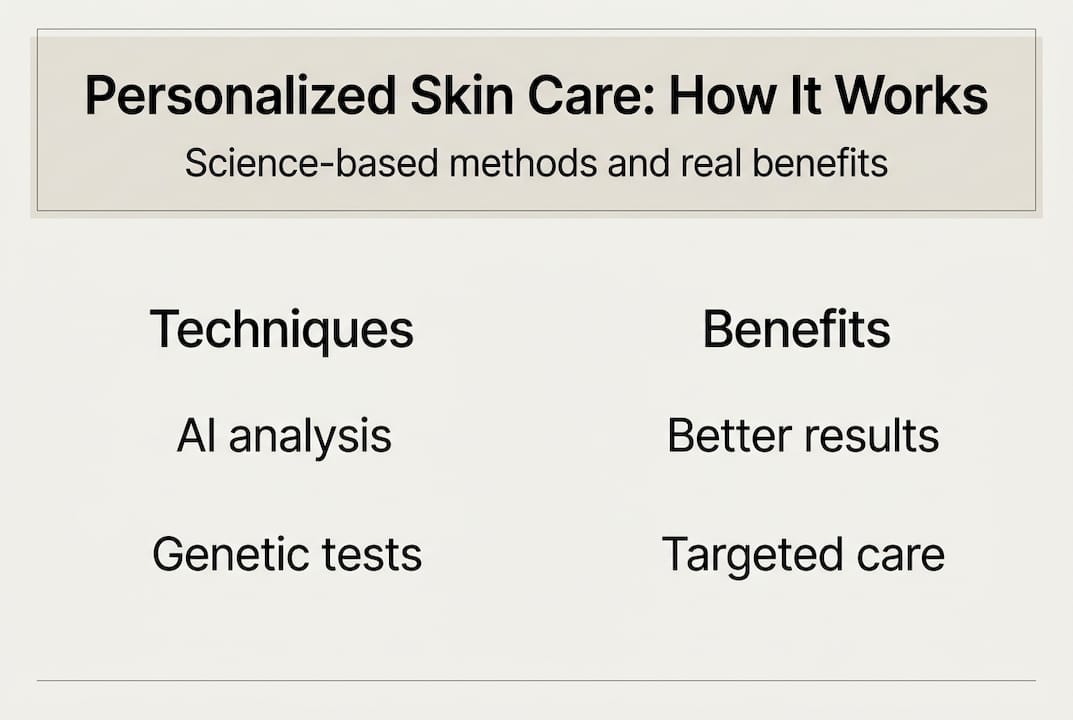
- Cosmetogenomics: This field analyzes your DNA to identify genetic risk factors for aging, pigmentation, and sensitivity. If your genes suggest lower collagen production, your plan can prioritize stimulating it early.
- AI-powered skin analysis: Apps and clinic tools assess high-resolution photos, lifestyle questionnaires, and environmental data to map your skin's condition with precision.
- 3D skin mapping: Imaging systems capture surface texture, pore size, hydration levels, and pigmentation depth in a single scan.
- Nanocarrier delivery systems: Nanoparticles carry active ingredients like retinol or vitamin C directly into the skin layer where they are needed, improving absorption and reducing irritation.
- 3D-printed patches: Emerging technology allows for custom patches loaded with specific actives, shaped to fit facial contours and target localized concerns like forehead lines or under-eye dehydration.
Advanced methods including AI, genomics, and nanoparticles represent a major leap from the trial-and-error approach most people default to. The role of AI in cosmetic dermatology is growing fast, and UAE clinics are integrating these tools into standard consultations.
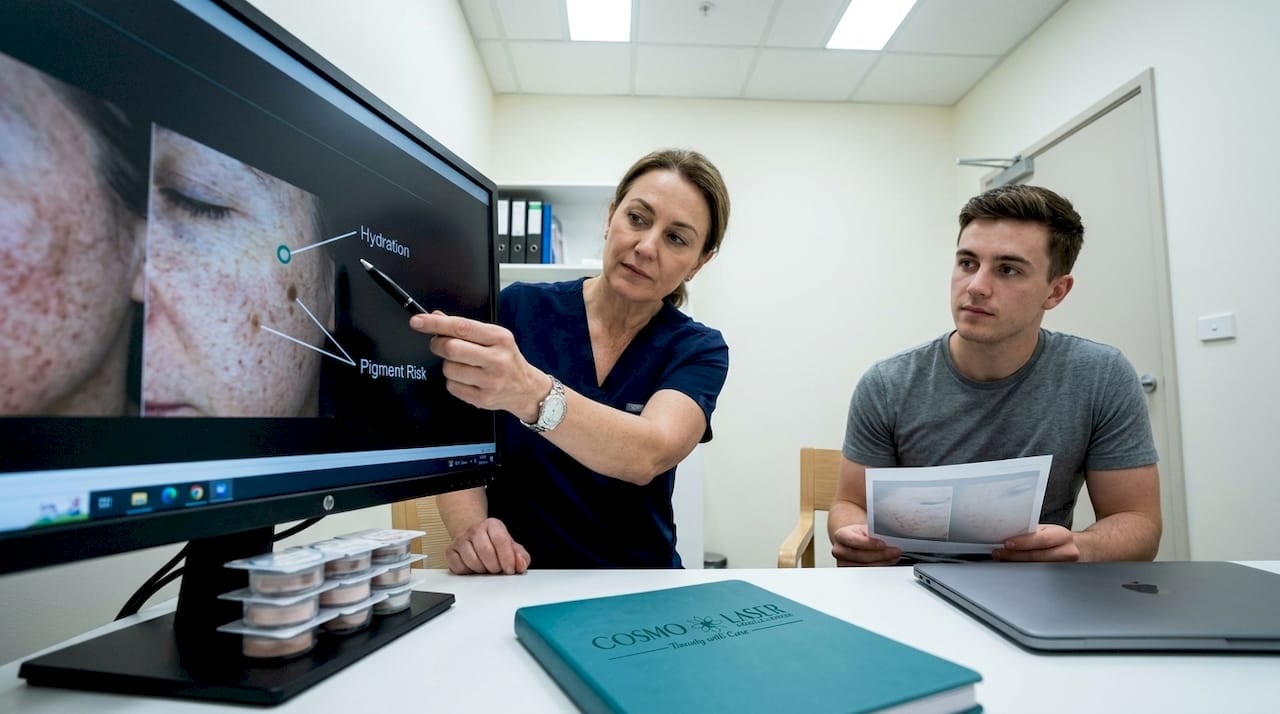
| Technology | What it measures | Best used for |
|---|---|---|
| Cosmetogenomics | Genetic aging and pigment risk | Long-term prevention planning |
| AI skin analysis | Surface condition and lifestyle factors | Routine customization |
| 3D mapping | Texture, hydration, pigmentation depth | Targeted treatment planning |
| Nanocarriers | Ingredient delivery efficiency | Active ingredient optimization |
| Clinical lasers | Tissue-level skin concerns | Pigmentation, resurfacing, rejuvenation |
Clinical procedures like lasers for tailored treatments, microneedling, and PRP therapy are also part of the personalized toolkit. These are adjusted based on your skin's response, tone, and condition rather than applied as a one-size-fits-all protocol.
Pro Tip: Before booking any personalized treatment, ask the clinic which specific diagnostic tools they use. A consultation that relies only on a visual assessment is not truly personalized.
How effective is personalized skin care? What the evidence shows
The technologies sound impressive, but results matter more than tools. So what does the clinical evidence actually say?
A detailed case study on biometric skin improvements found that custom skincare improved hydration, elasticity, and pigmentation in measurable ways after just 28 days. Specifically:
- Hydration increased by up to 53%
- Skin elasticity improved by up to 44%
- Pigmentation dropped from 7.2% to 2.3% of the measured surface area
These are not trivial numbers. For someone who has struggled with dull, dehydrated skin or stubborn dark spots despite using standard products, results like these represent a real quality-of-life improvement.
However, context matters. The benefits are most pronounced in complex cases, such as post-oncology skin recovery, chronic sensitivity, or persistent acne that has not responded to conventional treatments. For mild concerns like occasional dryness or a small breakout, a well-chosen basic routine may deliver similar results at a fraction of the cost.
When personalized care delivers the most value:
- Skin conditions that have not improved after 3 to 6 months of standard care
- Allergies or sensitivities that make standard ingredients problematic
- Multiple overlapping concerns (e.g., oily zones with dry patches and pigmentation)
- Post-procedure skin that needs targeted recovery support
- Conditions where lifestyle factors like diet or hormones are clearly involved
| Approach | Best for | Limitations |
|---|---|---|
| Generic skincare | Mild, stable concerns | Low precision, trial and error |
| Personalized skincare | Complex, persistent concerns | Higher cost, requires clinical oversight |
Results also depend on biology, lifestyle habits, and the accuracy of the diagnostics used. Factors like obesity, chronic stress, or poor sleep can limit how well even a perfectly tailored plan performs. This is why safe treatment scheduling and ongoing reassessment are part of any serious personalized program, not a one-time consultation.
Limitations, risks, and how to avoid the hype
Personalized skin care is a genuine advancement, but it is also a marketing goldmine. That combination creates real risks for consumers who are not equipped to tell the difference between science-backed customization and a cleverly packaged standard product.
The most important caveat is this: lack of large trials, standardization issues, and placebo effects mean that many products marketed as personalized are only marginally different from what you would find on any pharmacy shelf. A quiz that asks your age and skin type before recommending a serum is not the same as a clinical diagnostic.
Watch out for these red flags:
- No mention of specific diagnostic technology used
- Personalization based only on a short online questionnaire
- No clinician involved in reviewing your results
- Promises of dramatic results without any published evidence
- Products that cannot explain which ingredients are included and why
True personalization requires periodic reassessment. Your skin changes with the seasons, your hormones, and your age. A plan built on data from 12 months ago may no longer be accurate. This is why choosing a UAE clinic with ongoing monitoring built into the process matters more than the initial consultation alone.
For UAE residents considering this path, a practical approach works best. Start with a 3 to 6 month commitment to foundational skincare staples. If your concerns persist, that is the right moment to pursue clinical diagnostics. When you do, demand transparency about the methods used, ask to see evidence behind recommended treatments, and make sure a qualified clinician is interpreting your results.
Pro Tip: If a brand cannot tell you exactly which diagnostic method was used to personalize your product, it probably was not truly personalized. Ask the question directly before spending money.
Our perspective: Personalized skin care is powerful, if you cut through the noise
Working with clients across Sharjah and the wider UAE, we see a consistent pattern. People arrive having spent significant money on products that promised customization but delivered generic results. The frustration is real, and it is understandable. The UAE market is flooded with brands using the word "personalized" as a selling point rather than a clinical standard.
Here is our honest take: true personalization is most life-changing for people with complex, stubborn, or medically influenced skin concerns. For someone with mild seasonal dryness, a solid moisturizer and SPF will outperform an expensive custom serum every time. The technology is not the point. The accuracy of the diagnosis and the quality of the clinician interpreting it are what actually drive results.
The UAE is genuinely well-positioned for this kind of care. The combination of advanced clinics, tech adoption, and a population with diverse skin tones and concerns makes it a strong environment for personalized dermatology. But that advantage only materializes when you insist on vetted tools and qualified oversight. Explore the UAE cosmetic workflow to understand what a properly structured approach looks like before committing to any program.
Personalization is a tool. Used correctly, it is a powerful one.
Explore advanced, evidence-based skin care in Sharjah
If your skin concerns have not responded to standard routines, it may be time to move beyond guesswork. At CosmoLaser Medical Center in Sharjah, we use advanced diagnostics and clinician-led assessments to build treatment plans around your actual skin profile, not assumptions.
Our rejuvenation services are designed to address the root causes of aging, pigmentation, and texture concerns with precision. For those looking at targeted facial enhancement, our personalized face fillers and expert Botox treatment are tailored to your facial structure and goals. Book a consultation and find out which evidence-based tools can realistically amplify your results.
Frequently asked questions
Is personalized skin care worth it for common concerns like acne or pigmentation?
For tough, persistent cases it can deliver more precise results, but simple routines often match outcomes for mild concerns. Start with proven staples before investing in clinical customization.
How does personalized skin care actually work in UAE clinics?
Clinics use diagnostics like 3D mapping and AI analysis and sometimes genetic testing to build targeted treatment plans based on your individual skin data.
Are all personalized skincare products genuinely unique?
Most marketed products involve minor adjustments, not bespoke formulas. Genuine clinical personalization is always overseen by a qualified dermatologist using real diagnostic data.
What are the risks or downsides of personalized skincare?
The main risks include overpaying for minimally customized products and relying on results lacking standardized trials. Professional oversight and ingredient transparency are essential safeguards.