
TL;DR:
- Illegal cosmetic procedures can cause permanent scarring, nerve damage, and disfigurement.
- Verify clinics through official licensing portals and ensure practitioners are qualified healthcare professionals.
- Avoid red flags such as unlicensed clinics, suspiciously low prices, or skipped consultations.
Permanent scarring. Nerve damage. Disfigurement that no follow-up treatment can fully reverse. These are not rare horror stories — they are documented outcomes from illegal cosmetic procedures performed across the UAE every year. With the aesthetic industry growing fast and demand for quick, affordable treatments rising, the gap between safe, regulated care and dangerous shortcuts has never been wider. This guide gives you a practical, step-by-step strategy to verify every layer of your treatment — the clinic, the practitioner, the products, and the process — so you can pursue better skin and confidence without putting your health on the line.
Table of Contents
- Know the UAE's safety regulations and who enforces them
- Choose a licensed clinic: What to look for and how to verify
- Check practitioner credentials and experience before every treatment
- Insist on safe products, devices, and patient-centered protocols
- Spot and avoid common red flags and risky practices
- A reality check: Why shortcuts in aesthetics often end badly
- Safe, trusted aesthetic care: Your next steps with Cosmolaser
- Frequently asked questions
Key Takeaways
| Point | Details |
|---|---|
| Verify all licenses | Always check both clinic and practitioner licenses on official UAE health authority portals before booking any treatment. |
| Demand approved equipment | Insist on MOHAP-registered, FDA-approved products and devices for every procedure to guarantee safety and results. |
| Never skip consultation | Proper medical consultation, consent, and assessment are non-negotiable steps for any reputable aesthetic service. |
| Spot red flags early | Be on the lookout for warning signs like missing paperwork, cheap prices, and non-clinic venues to avoid dangerous outcomes. |
Know the UAE's safety regulations and who enforces them
Before you book anything, you need to understand who actually sets the rules for aesthetic treatments in the UAE. Three main authorities govern this space, and each covers a different emirate.
- Dubai Health Authority (DHA): Regulates all clinics and practitioners operating in Dubai.
- Department of Health (DoH): Oversees aesthetic services in Abu Dhabi.
- Ministry of Health and Prevention (MOHAP): Covers all remaining emirates, including Sharjah, Ajman, Ras Al Khaimah, Fujairah, and Umm Al Quwain.
These bodies don't just issue licenses and walk away. They set detailed standards covering clinic design, equipment safety, infection control protocols, staff training requirements, and patient safety procedures. Non-surgical cosmetic standards published by the DHA outline exactly what a compliant clinic must demonstrate before it can legally operate.
| Authority | Emirate covered | Key function |
|---|---|---|
| DHA | Dubai | Licensing, inspection, standards enforcement |
| DoH | Abu Dhabi | Practitioner and facility regulation |
| MOHAP | All other emirates | National standards, product registration |
One of the most useful tools available to you as a patient is the Sheryan portal. This is the DHA's official license verification system where you can search any Dubai clinic or practitioner by name and confirm their license status in real time. It takes about 60 seconds and removes all guesswork.
"A licensed clinic is not just a legal requirement — it is your first and strongest layer of protection against preventable harm."
Why does this matter so much? Because the consequences of bypassing official standards are severe. Infections, chemical burns, vascular occlusion from filler injections, and permanent pigmentation changes are all documented complications from treatments performed outside the regulated system. Before you even think about which treatment you want, use our cosmetic treatment checklist to make sure every box is ticked. Understanding these regulations also applies directly to specific procedures — laser hair removal and Botox each carry their own compliance requirements under UAE law.
Choose a licensed clinic: What to look for and how to verify
Knowing the regulations is step one. Confirming that your chosen clinic actually meets them is step two — and it requires more than just reading a website's "About" page.
Here is a numbered process you can follow before your first visit:
- Search the Sheryan portal for the clinic's name and confirm its DHA license is active and current.
- Check the MOHAP or DoH websites if you are outside Dubai, using the respective emirate's online verification tool.
- Call the clinic and ask for their license number before booking. A legitimate clinic will share this without hesitation.
- Visit in person before committing to a treatment. Look for displayed credentials, clean facilities, and professional reception protocols.
- Ask for a consultation first. Reputable clinics always offer this before any procedure.
The DHA standards cover licensure, equipment safety, clinic design, and infection control — meaning a compliant clinic will show visible signs of all of these on-site.
| Indicator | Licensed clinic | Gray-market or illegal provider |
|---|---|---|
| License displayed | Yes, prominently | No or vague |
| Consent forms | Always provided | Rarely or never |
| Receipts issued | Standard practice | Often avoided |
| Practitioner credentials | Verifiable online | Unverifiable or absent |
| Consultation offered | Always | Skipped or rushed |
Physical signs matter too. A professional clinic will have clean treatment rooms, sealed single-use equipment, proper waste disposal, and staff in medical attire. If anything feels off during your visit, trust that instinct.
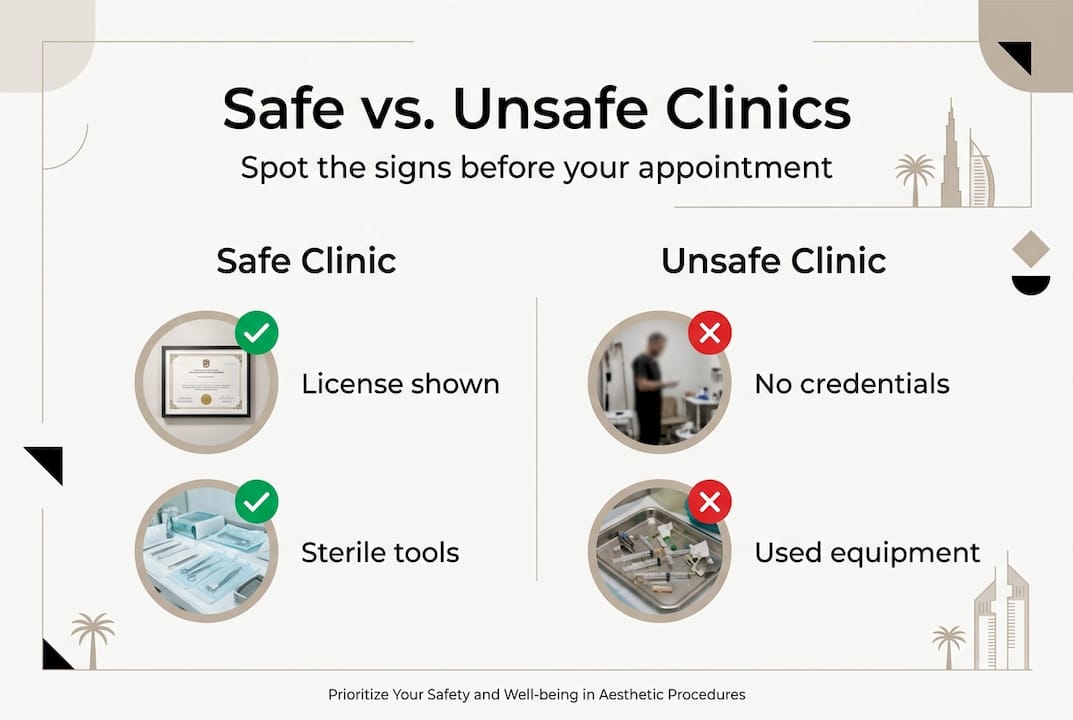
Pro Tip: Screenshot or photograph the clinic's displayed license before your appointment. If a dispute ever arises, you have documented proof of the credentials you relied on when choosing your provider.
For a deeper breakdown of what separates a trustworthy facility from a risky one, read our guide on how to select a cosmetic clinic in the UAE. You can also find specific guidance on how to book a safe appointment without missing critical steps.
Check practitioner credentials and experience before every treatment
Once the clinic is certified, you need to be just as rigorous about who actually performs your treatment. In the UAE, the law is specific: only qualified healthcare professionals with at least three years of relevant training are authorized to perform injectables and laser procedures. This rules out beauty therapists, aestheticians without medical qualifications, and nurses acting independently for injectable treatments.
Here is how to verify your practitioner:
- Ask for their full name and license number before the session.
- Search the DHA's Practitioner Quality Registry (PQR) for Dubai-based practitioners.
- Use the DoH or MOHAP portals for practitioners in other emirates.
- Confirm their specialty matches the treatment you are receiving. A dermatologist or trained aesthetic physician should be performing injectables and advanced laser work.
- Ask how many of this specific procedure they have performed. Experience counts enormously with techniques like filler placement or laser settings for darker skin tones.
The distinction between who can and who cannot legally perform these treatments is not bureaucratic red tape. It reflects the genuine complexity of these procedures. Botox injected incorrectly can cause drooping eyelids or asymmetry. Laser settings miscalibrated for your skin type can cause burns or hyperpigmentation. These are not theoretical risks.
Credentials are not just paperwork. They represent the training that stands between a great result and a permanent mistake.
Pro Tip: If a practitioner becomes defensive or evasive when you ask for their license number, that reaction alone is a reason to walk away. Confident, qualified professionals welcome verification.
Always cross-reference what you find with our safe treatment checklist and review our appointment booking tips to make sure you have covered every angle before sitting in the treatment chair.
Insist on safe products, devices, and patient-centered protocols
With the right clinic and practitioner confirmed, your attention shifts to what actually happens during your session — and what goes into your skin.
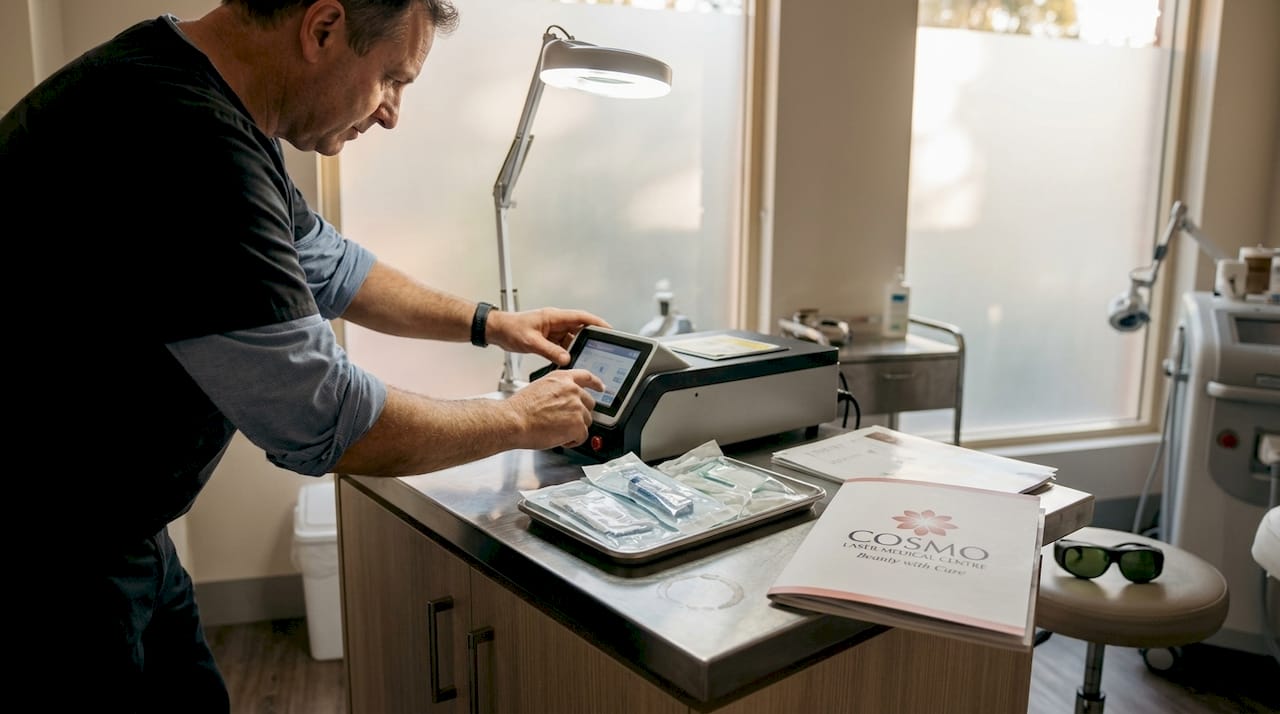
Every product and device used in a UAE aesthetic clinic must be MOHAP-registered and, for devices, cleared by the FDA or an equivalent international body. Clinics must use approved products and devices and follow strict infection control and emergency readiness protocols. This is not optional. If a clinic cannot confirm the regulatory status of its products, that is a serious concern.
Here is what a proper pre-treatment consultation should include:
- Full medical history review including medications, allergies, and previous treatments.
- Skin type assessment — especially important for laser treatments on darker skin tones common in the UAE.
- Clear explanation of risks and benefits for your specific procedure.
- Signed informed consent form before any treatment begins.
- Discussion of aftercare and follow-up so you know exactly what to expect.
Questions worth asking your practitioner before any session:
- Is this device FDA-cleared or CE-marked?
- How is the equipment sterilized between patients?
- What is your emergency protocol if I have an adverse reaction?
- Have you treated patients with my skin type before?
Statistic to note: Vascular occlusion from filler injections — one of the most serious complications in aesthetics — is almost entirely preventable with proper training, approved products, and correct injection technique.
Treatments like PRP therapy and laser resurfacing require especially careful calibration for patients with Fitzpatrick skin types IV through VI, which are prevalent across the UAE's diverse population. A qualified practitioner will adjust settings accordingly. Read more about the benefits of a cosmetic consultation and how to schedule safe treatments to stay protected at every stage.
Spot and avoid common red flags and risky practices
Even with all checks done, you need to stay alert for warning signs that appear at the last minute — or that you might have missed earlier.
The most common red flags for unsafe or illegal aesthetic services include:
- No license displayed or refusal to share license details on request.
- Home-based or salon settings instead of a registered medical facility.
- Prices that seem too good to be true. Quality equipment, trained staff, and approved products all cost money. Suspiciously low prices often mean corners are being cut.
- Rushed or skipped consultation. If someone is ready to inject or laser you within minutes of meeting you, leave.
- No consent form or receipt. These are legally required. Their absence is not a minor oversight.
- Unbranded or unverified products. If you cannot identify the filler or device being used, ask. If they cannot answer clearly, that is your answer.
Complications from illegal cosmetic work include infections, burns, and permanent disfigurement — and correcting botched procedures often costs far more than the original treatment would have at a licensed clinic.
"The cheapest treatment is rarely the least expensive one. Corrections, medical care, and lost confidence all carry a price."
If you spot these red flags, leave without treatment. You can report unlicensed providers to the DHA, DoH, or MOHAP depending on the emirate. A second opinion from a licensed clinic is always worth the time. For more on what safe laser treatments look like in practice, see our guide to safe laser hair removal in the UAE.
A reality check: Why shortcuts in aesthetics often end badly
We have seen the objective criteria. Now for the harder truth.
The appeal of a cheaper, faster treatment is real. Aesthetic procedures are not cheap, and the UAE market is full of providers promising the same results at half the price. But the patients who end up in our clinic after a botched treatment elsewhere did not save money. They spent more — on corrections, on medical care, on time off work, and on the emotional toll of living with a result they did not choose.
Illegal treatments consistently result in higher costs and more complications than treatments performed at professional, licensed clinics. This is not a marketing claim. It is a pattern documented by UAE physicians who treat the fallout every week.
Today's aesthetic treatments — advanced lasers, volumizing fillers, biostimulators — are genuinely complex. They require real medical training, calibrated equipment, and individualized judgment. The oversight system exists because these procedures carry real risk when performed incorrectly. Choosing a licensed provider is not paying for a certificate on the wall. It is paying for the training, accountability, and safety infrastructure behind it.
Use the safe skin care checklist as your baseline every single time — not just the first time.
Safe, trusted aesthetic care: Your next steps with Cosmolaser
If safety and expertise are your non-negotiables, you deserve a clinic that treats them the same way.
At CosmoLaser Medical Center in Sharjah, every treatment follows the regulatory standards outlined in this guide. Our team of licensed aesthetic physicians and dermatologists uses only MOHAP-registered, approved devices and products. We provide full consultations, signed consent forms, and transparent aftercare for every patient. Whether you are looking for safe Botox treatments, expert laser hair removal, or skin rejuvenation options tailored to your skin type, we are here to help you move forward with confidence. Book a consultation today and experience what regulated, patient-first aesthetic care actually feels like.
Frequently asked questions
How do I check if a clinic is licensed in Dubai?
Search the clinic's name on the Sheryan portal or app to confirm its DHA license is active, and look for credentials displayed visibly inside the clinic.
Who is allowed to perform injectables and laser procedures in the UAE?
Only licensed physicians and healthcare professionals with at least three years of relevant training are authorized by DHA, DoH, or MOHAP to perform injectables and laser treatments.
What documents should I receive before an aesthetic treatment?
You must receive a signed informed consent form outlining risks and benefits, plus an official receipt for your procedure — both are required by UAE regulatory standards.
What are the main warning signs of unsafe or illegal aesthetic services?
Key red flags include home or salon settings, prices that seem unusually low, no license displayed, and the absence of a proper consultation or consent paperwork before treatment begins.