
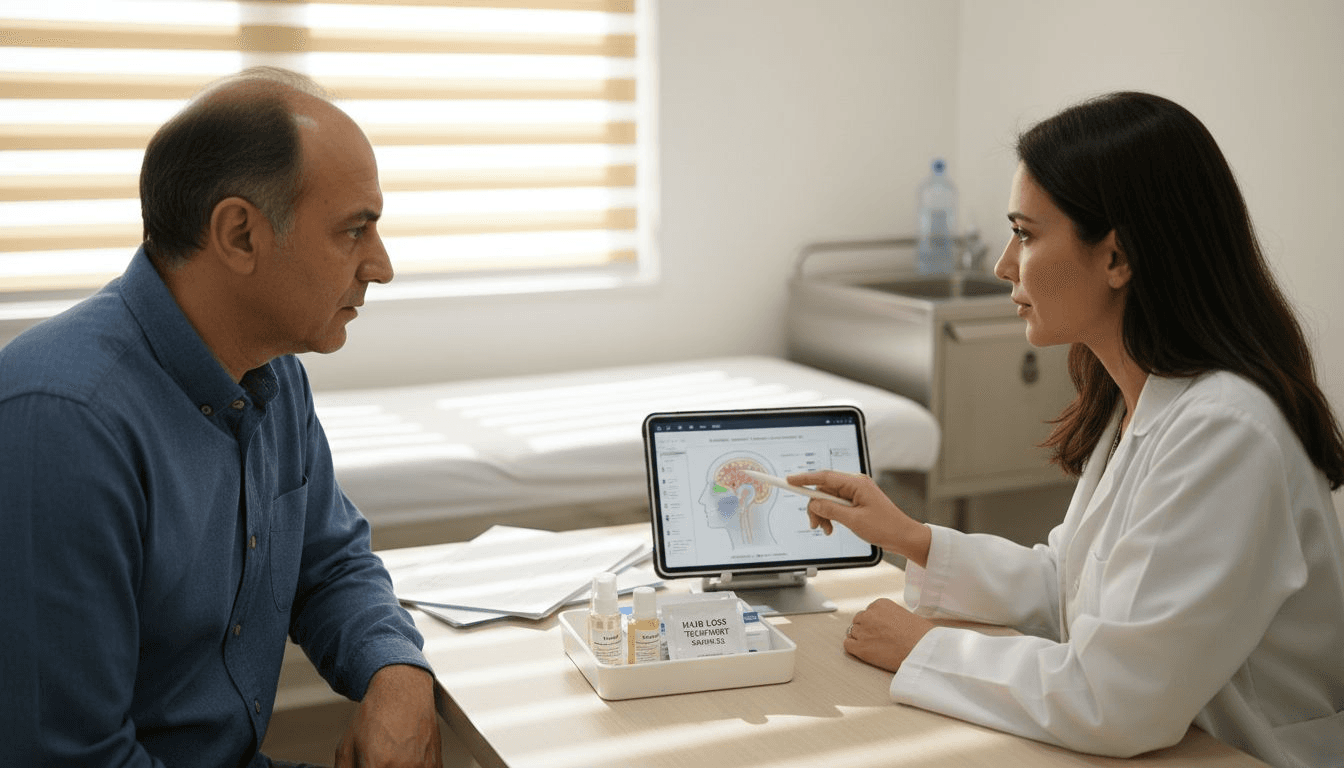
You've probably heard that hair restoration therapy delivers instant results. That's a myth. Real hair regrowth takes time, patience, and the right treatment approach tailored to your specific hair loss pattern. This guide breaks down what hair restoration therapy actually involves, from non-surgical options like PRP to surgical transplants, helping you understand which method fits your needs and what realistic outcomes you can expect in the UAE.
Table of Contents
- Introduction To Hair Restoration Therapy
- Causes Of Hair Loss And Their Relevance To Therapy
- Mechanisms Of Non-Surgical Hair Restoration Therapies
- Surgical Hair Restoration Methods
- Common Misconceptions About Hair Restoration Therapy
- Safety And Risks Of Hair Restoration Therapy
- Choosing The Right Hair Restoration Therapy In The Uae
- Treatment Timeline And Patient Expectations
- Explore Professional Hair Restoration Options At Cosmolaser In Sharjah
- FAQ
Key takeaways
| Point | Details |
|---|---|
| Two main approaches | Non-surgical therapies (PRP, minoxidil, laser) stimulate existing follicles; surgical methods (FUE, FUT) transplant hair permanently. |
| Results take time | Visible hair growth typically appears 3 to 6 months after starting treatment, with full results by 12 months. |
| Personalized plans work best | Treatment choice depends on hair loss cause, severity, budget, and personal goals for optimal outcomes. |
| Safety profile strong | Non-surgical side effects are mild; surgical complications occur in under 5% of cases with experienced surgeons. |
| Consistency matters | Adherence to treatment schedules and follow-up appointments significantly improves success rates and satisfaction. |
Introduction to hair restoration therapy
Hair restoration therapy encompasses medical treatments designed to reverse hair loss and promote natural regrowth. The field divides into two primary categories: non-surgical and surgical approaches.
Non-surgical therapies work by stimulating existing hair follicles to produce healthier, thicker strands. These include platelet-rich plasma (PRP) injections, topical medications like minoxidil, and low-level laser therapy (LLLT). These methods target the biological processes that cause follicle miniaturization, the hallmark of pattern baldness.
Surgical restoration involves transplanting hair follicles from donor areas (usually the back of the scalp) to thinning or bald regions. The two main techniques are Follicular Unit Extraction (FUE) and Follicular Unit Transplantation (FUT). FUE removes individual follicles, while FUT harvests a strip of scalp tissue.
Your treatment goals typically focus on three outcomes:
- Increasing hair density in thinning areas
- Restoring hairline definition and coverage
- Rebuilding confidence through natural-looking results
The right therapy depends on your hair loss pattern, stage of progression, and whether you want to stimulate existing follicles or add new ones through transplantation. Understanding these distinctions helps you make informed decisions about which hair restoration therapies match your situation and expectations.
Causes of hair loss and their relevance to therapy
Knowing why you're losing hair directly impacts which restoration therapy will work for you. Androgenetic alopecia accounts for roughly 95% of all hair loss cases treated with restoration therapies. This genetic condition causes hair follicles to shrink progressively, producing thinner, shorter strands until they eventually stop growing.
Other hair loss causes require different treatment approaches:
- Alopecia areata (autoimmune disorder causing patchy hair loss)
- Telogen effluvium (stress-induced temporary shedding)
- Medical conditions like thyroid disorders or nutritional deficiencies
- Scarring alopecia (permanent follicle damage)
Therapies targeting follicle stimulation work well for androgenetic alopecia because the follicles remain alive but miniaturized. PRP and minoxidil can reactivate these dormant follicles. However, conditions causing follicle destruction (like scarring alopecia) may only respond to surgical transplantation, since you're replacing destroyed follicles rather than reviving them.
Professional diagnosis before treatment prevents wasted time and money on ineffective therapies. A dermatologist or hair restoration specialist examines your scalp, reviews your medical history, and may perform blood tests to identify the underlying cause. This assessment determines whether your follicles can respond to stimulation or if transplantation offers the only viable solution.
Misdiagnosing your hair loss type leads to disappointing results. Someone with alopecia areata might see zero improvement from surgical transplants because the immune system attacks transplanted follicles just like original ones. Conversely, someone with advanced androgenetic alopecia might waste months on topical treatments when their follicles have already miniaturized beyond recovery.
Mechanisms of non-surgical hair restoration therapies
Non-surgical treatments work by addressing the biological processes that cause hair follicles to weaken and shrink. PRP therapy delivers concentrated growth factors extracted from your own blood directly to your scalp. These growth factors stimulate follicle cells, improve blood supply to the scalp, and prolong the active growth phase of hair cycles.
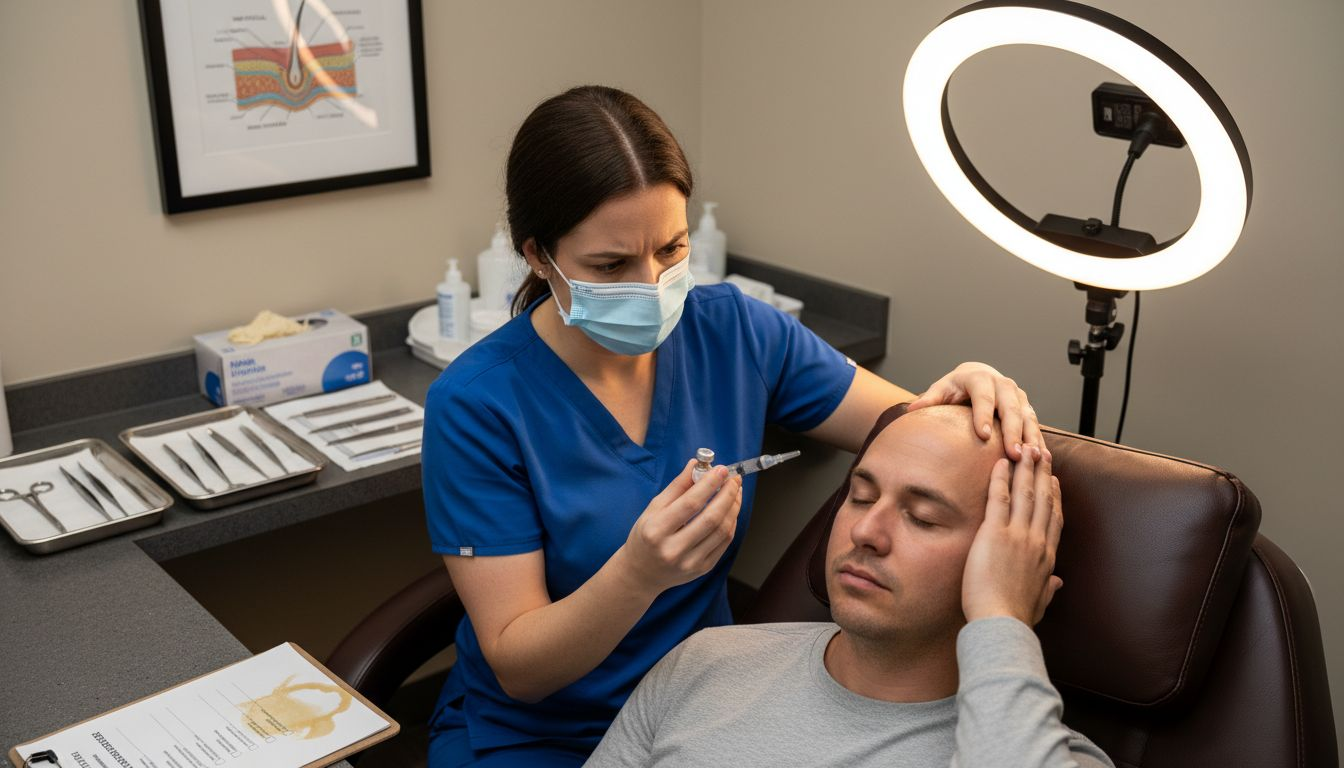
During PRP therapy sessions, a small blood sample is processed in a centrifuge to separate plasma rich in platelets. This plasma contains proteins that trigger tissue repair and cellular regeneration. Clinical studies show PRP improves hair density in up to 70% of patients with androgenetic alopecia, with visible results appearing after three to four monthly sessions.
Minoxidil operates through a different mechanism. This topical medication prolongs the anagen (growth) phase of hair follicles while shortening the resting phase. It also widens blood vessels in the scalp, improving nutrient delivery to follicles. You apply it directly to thinning areas twice daily. Most patients notice reduced shedding within two months and new growth by four months.
Low-level laser therapy uses specific wavelengths of red light to enhance cellular metabolism in hair follicles. LLLT promotes follicle cell activity and increases local circulation, creating conditions favorable for hair growth. Studies demonstrate 50% improvement in hair density after 24 weeks of consistent use with FDA-cleared laser devices.
These therapies share common requirements:
- Multiple sessions spread over several months
- Ongoing maintenance treatments to sustain results
- Best outcomes when started during early hair loss stages
- Combination approaches often outperform single therapies
Pro Tip: Consistency determines success with non-surgical therapies. Missing PRP sessions or skipping minoxidil applications disrupts the follicle stimulation cycle, significantly reducing treatment effectiveness. Set reminders and commit to the full recommended protocol.
Surgical hair restoration methods
Surgical restoration permanently relocates healthy hair follicles from donor zones to areas experiencing hair loss. The two primary techniques differ in harvesting method, scarring, and recovery demands.
Follicular Unit Transplantation (FUT) involves removing a strip of scalp tissue from the back of your head, typically 1 to 1.5 centimeters wide. Technicians dissect this strip under microscopes to isolate individual follicular units containing one to four hairs. The surgeon then creates tiny incisions in recipient areas and carefully places each graft. FUT leaves a linear scar at the donor site, hidden by surrounding hair.
Follicular Unit Extraction (FUE) extracts individual follicular units directly from the donor area using a specialized punch tool less than 1 millimeter in diameter. Each follicle removal leaves a tiny circular mark that heals as a barely visible dot. FUE takes longer than FUT but eliminates linear scarring and allows shorter hairstyles without visible donor scars.
| Feature | FUT | FUE |
|---|---|---|
| Invasiveness | Moderate (strip removal) | Minimal (individual extraction) |
| Scarring | Linear scar at donor site | Tiny dot scars, barely visible |
| Grafts per session | 2,000 to 3,000+ | 1,500 to 2,500 |
| Recovery time | 10 to 14 days | 7 to 10 days |
| Cost | Generally lower | Generally higher |
Hair transplant procedures achieve graft survival rates exceeding 85% when performed by experienced surgeons under optimal conditions. Transplanted follicles maintain their genetic resistance to hair loss hormones, meaning they continue growing in their new location for life.
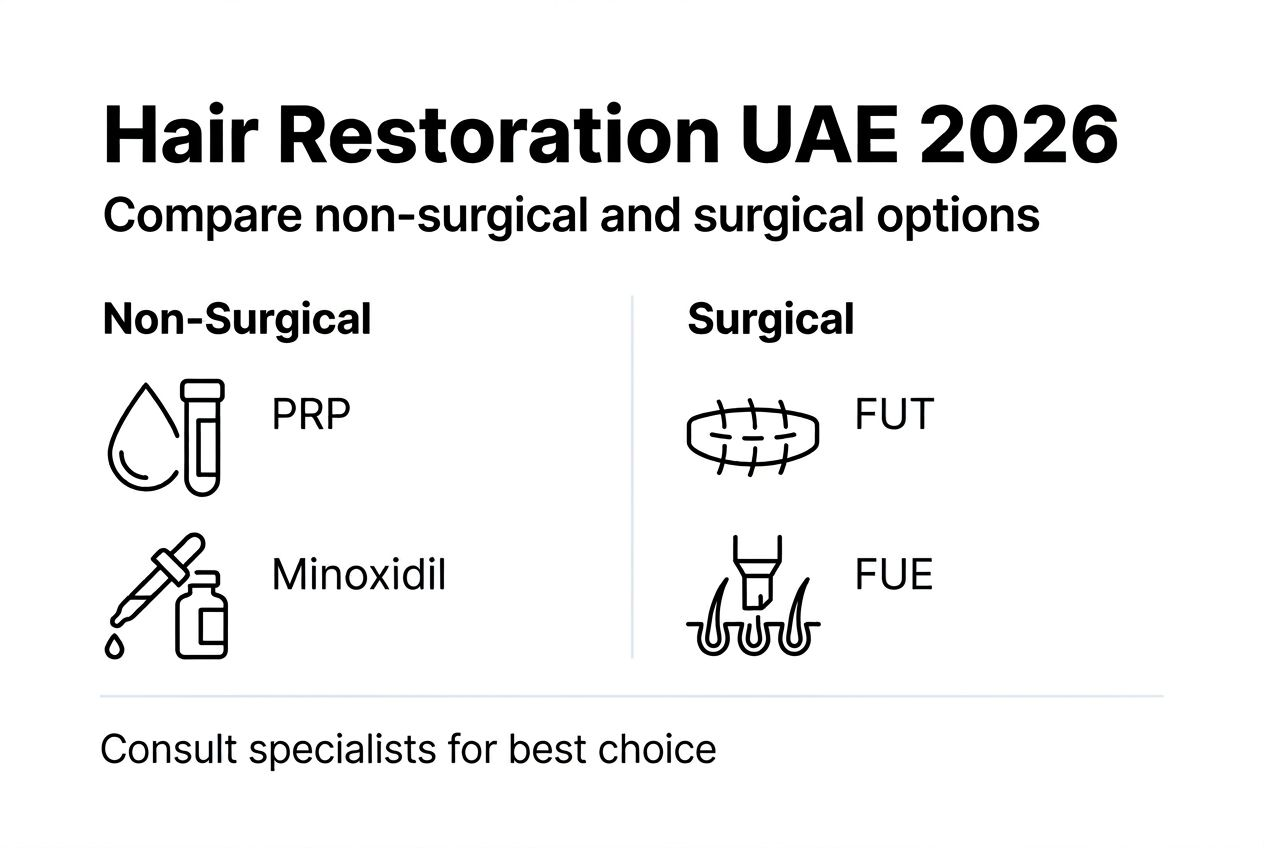
Visible results emerge gradually. Transplanted hairs shed within two to three weeks post-surgery, which alarms many patients but represents normal healing. New growth begins around month three, with noticeable coverage by month six. Full density and final results appear 12 to 18 months after surgery.
Ideal candidates for surgical restoration include:
- Advanced androgenetic alopecia with significant baldness
- Sufficient healthy donor hair at the back and sides of the scalp
- Realistic expectations about density and coverage
- No active scalp infections or inflammatory conditions
- Stable hair loss patterns (not rapidly progressing)
Pro Tip: FUE suits patients wanting minimal scarring and faster recovery, especially those preferring short hairstyles. FUT works better when you need maximum graft numbers in a single session and don't mind a linear scar concealed by longer hair.
Common misconceptions about hair restoration therapy
Misunderstandings about hair restoration create unrealistic expectations and disappointment. The biggest myth claims results appear within weeks. Reality contradicts this fantasy. Hair follicles follow biological growth cycles that cannot be rushed. Even after successful treatment, you'll wait months before seeing visible improvement.
Another misconception suggests hair transplant surgery works for all hair loss types. Wrong. Surgery primarily benefits androgenetic alopecia because transplanted follicles from the donor area resist pattern baldness hormones. Conditions like alopecia areata involve immune system attacks that affect transplanted follicles equally, making surgery ineffective. Scarring alopecia damages the scalp environment, preventing transplanted follicles from thriving.
Many people dismiss non-surgical treatments as weak or ineffective compared to surgery. This oversimplifies the situation. Non-surgical therapies excel at early-stage hair loss when follicles remain viable but miniaturized. PRP and minoxidil can reverse this miniaturization, making surgery unnecessary. Surgery becomes the better option only when follicles have died or shrunk beyond recovery.
Some believe once you start hair restoration therapy, you'll depend on it forever or your hair falls out worse than before. Partially true for medications like minoxidil. Stopping treatment allows the natural progression of androgenetic alopecia to resume, which means gradual thinning continues. However, you won't suddenly lose more hair than if you'd never treated it. Surgical transplants remain permanent because relocated follicles retain their genetic resistance.
Key misconceptions corrected:
- Instant results: Hair growth follows natural cycles requiring 3 to 6 months minimum
- Universal effectiveness: Treatment success depends on matching therapy to hair loss cause
- Surgery superiority: Non-surgical methods work excellently for early intervention
- Permanent dependency: Stopping non-surgical treatments resumes natural loss patterns, not accelerated shedding
- One-size-fits-all: Personalized assessment determines optimal therapy combinations
Safety and risks of hair restoration therapy
Non-surgical hair restoration therapies carry minimal risks when performed under proper medical supervision. PRP therapy may cause temporary scalp tenderness, mild swelling, or slight redness at injection sites. These effects typically resolve within 24 to 48 hours. Minoxidil occasionally produces scalp irritation or initial shedding as weak hairs make way for stronger ones. Laser therapy rarely causes problems beyond mild scalp warmth during treatment.
Side effects from PRP and minoxidil remain generally mild, including temporary scalp reactions and shedding that subsides as treatment progresses. Serious complications are exceptionally rare when treatments follow established protocols.
Surgical procedures involve slightly higher risks due to their invasive nature:
- Infection at donor or recipient sites (occurs in under 5% of cases with sterile technique)
- Temporary numbness around surgical areas lasting weeks to months
- Shock loss where existing hairs near transplants temporarily shed
- Unnatural-looking hairline if grafts are poorly placed
- Scarring more visible than expected with FUT
Experienced surgeons minimize these risks through meticulous technique, proper patient selection, and sterile surgical environments. Choosing board-certified dermatologists or hair restoration specialists with proven track records significantly reduces complication rates.
Post-treatment care prevents most problems. Following your provider's instructions about wound care, activity restrictions, and medication schedules protects your investment and health. Signs requiring immediate medical attention include severe pain, excessive bleeding, pus formation, or fever above 101°F.
Patients with certain conditions face elevated risks. Active scalp infections, bleeding disorders, or autoimmune diseases require careful evaluation before proceeding. Pregnant or nursing women should postpone treatments like minoxidil and PRP due to insufficient safety data.
The safety profile of hair restoration therapy has improved dramatically over the past decade. Modern techniques, better understanding of follicle biology, and refined surgical methods make complications increasingly uncommon. Your risk level depends heavily on provider expertise and your adherence to pre- and post-treatment guidelines.
Choosing the right hair restoration therapy in the UAE
Selecting appropriate hair restoration therapy requires weighing multiple factors specific to your situation. Hair loss cause and severity top the list. Early-stage androgenetic alopecia responds well to PRP therapy or minoxidil. Advanced baldness with extensive follicle loss demands surgical transplantation.
Budget constraints influence decisions significantly. Non-surgical therapies cost less upfront but require ongoing maintenance. Initial PRP treatment series in the UAE ranges from AED 1,500 to AED 3,000, with maintenance sessions every few months. Surgical procedures cost AED 10,000 to AED 30,000 depending on graft numbers but provide permanent results without continuous expense.
Your lifestyle and time availability matter. Non-surgical options demand regular clinic visits for PRP or daily minoxidil applications. Surgery requires one or two sessions plus recovery time but eliminates ongoing appointments. Consider whether you can commit to long-term maintenance protocols or prefer a one-time intervention.
| Treatment | Cost Range (UAE) | Time Commitment | Invasiveness | Maintenance |
|---|---|---|---|---|
| PRP therapy | AED 1,500 to 3,000 per series | Monthly sessions initially | Minimal | Every 3 to 6 months |
| Minoxidil | AED 100 to 300 monthly | Daily application | None | Continuous |
| LLLT | AED 2,000 to 5,000 device | 3x weekly at home | None | Ongoing |
| FUE surgery | AED 15,000 to 30,000 | One session + recovery | Moderate | None |
| FUT surgery | AED 10,000 to 25,000 | One session + recovery | Moderate | None |
Personalized treatment plans assessing hair loss patterns and patient goals improve outcomes, with satisfaction rates climbing over 30% compared to generic approaches. Cookie-cutter protocols ignore individual variables that dramatically affect results.
Practical decision guidelines:
- Early hair loss (Norwood 1 to 3): Start with PRP or minoxidil
- Moderate loss (Norwood 4 to 5): Combine non-surgical therapy with possible future surgery
- Advanced loss (Norwood 6 to 7): Surgical transplantation primary option
- Limited budget: Begin with minoxidil, add PRP as finances allow
- Busy schedule: Consider surgery for permanent results without ongoing visits
Pro Tip: Consult qualified hair restoration specialists who perform comprehensive scalp analysis and discuss multiple options without pushing a single approach. Providers offering both surgical and non-surgical therapies tend to recommend treatments matching your needs rather than their specialty limitations.
Treatment timeline and patient expectations
Understanding realistic timelines prevents disappointment and helps you commit to necessary treatment duration. Hair follicles don't respond instantly to any therapy because they follow predetermined growth cycles averaging 2 to 6 years.
Visible improvement timelines by treatment type:
- PRP therapy shows reduced shedding within 6 to 8 weeks, with new growth appearing around month 3 to 4.
- Minoxidil decreases hair loss by week 8, produces visible regrowth by month 4 to 6.
- Low-level laser therapy requires 4 to 6 months of consistent use before noticing density changes.
- Surgical transplants shed initially, begin growing month 3, show substantial coverage by month 6 to 9, reach full density by month 12 to 18.
Non-surgical therapies demand continuous treatment to maintain results. Stopping PRP or minoxidil allows hair loss progression to resume. Plan for maintenance sessions every 3 to 6 months with PRP, daily minoxidil use indefinitely, or ongoing laser therapy 2 to 3 times weekly.
Follow-up appointments track progress and adjust protocols. Your provider photographs your scalp, measures hair density, and evaluates treatment response. These evaluations typically occur every 3 months during active treatment phases. Adjustments might include increasing PRP concentration, combining therapies, or modifying surgical plans for additional sessions.
Patient adherence determines success more than treatment type. Skipping appointments, inconsistent medication use, or abandoning therapy prematurely wastes previous efforts. Studies show patients following complete protocols achieve 40% better outcomes than those with poor adherence.
Setting realistic goals protects your mental health throughout the process. Hair restoration improves density and coverage but rarely recreates the full thickness of your teenage years. Expect gradual enhancement rather than dramatic overnight transformation. Photographs tracking progress help you appreciate incremental improvements that daily mirror checks might miss.
Prepare psychologically for the waiting period. The first 3 months test patience as you invest time and money with minimal visible return. Results accelerate during months 3 to 6, with continued improvement through month 12. Knowing this timeline upfront prevents premature therapy abandonment right before results would have appeared.
Explore professional hair restoration options at Cosmolaser in Sharjah
You've learned how hair restoration therapy works and which factors determine the right approach for your situation. Applying this knowledge starts with expert consultation tailored to UAE patients.
Cosmolaser Medical Center in Sharjah specializes in comprehensive hair restoration solutions, including advanced PRP therapy protocols and personalized treatment planning. The clinic's experienced specialists use state-of-the-art technology to assess your scalp condition, identify your specific hair loss pattern, and design treatment strategies combining the most effective therapies for your goals.
Whether you're exploring non-surgical options to stimulate existing follicles or considering more permanent surgical solutions, Cosmolaser's team guides you through every decision with transparent information about expected outcomes, timelines, and costs. The center's range of aesthetic services extends beyond hair restoration to include laser hair removal and other cosmetic treatments that complement your overall appearance goals.
Schedule a consultation at Cosmolaser Medical Center to receive a personalized hair restoration assessment. The clinic's commitment to patient education and individualized care ensures you understand your options and feel confident in your treatment choices.
FAQ
What is hair restoration therapy?
Hair restoration therapy includes medical treatments designed to reverse hair loss by either stimulating existing follicles or transplanting new ones. Non-surgical methods like PRP injections and minoxidil promote natural regrowth by improving follicle health. Surgical techniques transplant healthy follicles from donor areas to balding regions, providing permanent restoration for advanced hair loss.
How long does it take to see results from hair restoration therapy?
Visible results typically appear 3 to 6 months after starting treatment, regardless of method. Hair follicles follow natural growth cycles that cannot be accelerated. Non-surgical therapies like PRP show initial improvements around month 3 to 4, while surgical transplants begin producing new growth by month 3 with full density by month 12 to 18.
Is hair restoration therapy safe?
Hair restoration therapy has a strong safety profile when performed by qualified specialists. Non-surgical treatments cause mild, temporary side effects like scalp irritation or initial shedding. Surgical procedures carry slightly higher risks including infection and scarring, but serious complications occur in fewer than 5% of cases with experienced surgeons following proper protocols.
Who is a good candidate for surgical hair restoration?
Ideal surgical candidates have advanced androgenetic alopecia with sufficient healthy donor hair at the back and sides of the scalp. Stable hair loss patterns, realistic expectations about coverage, and absence of active scalp conditions make surgery most effective. Early-stage hair loss often responds better to non-surgical therapies, reserving surgery for more extensive baldness.
Can I combine different hair restoration treatments?
Combining treatments often produces superior results compared to single therapies. Many patients use minoxidil or PRP therapy alongside surgical transplants to protect existing hair while adding density through transplantation. Your specialist designs combination protocols based on your hair loss pattern, treatment goals, and budget to optimize outcomes and maximize long-term satisfaction.
Do I need to continue treatment after seeing results?
Non-surgical therapies require ongoing maintenance to sustain results because they don't stop the underlying causes of hair loss. Discontinuing PRP or minoxidil allows androgenetic alopecia to progress naturally, gradually reducing the gains achieved. Surgical transplants remain permanent since relocated follicles retain genetic resistance to hair loss hormones, requiring no maintenance for transplanted areas.